
A new windscreen can restore clear visibility, but on many modern vehicles the work does not end when the glass is fitted. Windscreen camera calibration may also be required to ensure the camera behind the glass is reading the road accurately and your driver-assistance systems are working as intended.
That small camera, usually mounted near the rear-view mirror, supports safety features that many drivers use every day without noticing. If it is not correctly aligned after a windscreen replacement, the vehicle may not recognise road markings, other vehicles or hazards in the right position. The result can be warning lights, unavailable safety functions or, more seriously, assistance that does not respond when expected.
What does windscreen camera calibration do?
Many vehicles are fitted with Advanced Driver Assistance Systems, often shortened to ADAS. These systems rely on cameras, sensors and software to monitor the road and support the driver. Depending on the make and model, they may operate lane departure warnings, lane-keeping assistance, automatic emergency braking, traffic sign recognition, adaptive cruise control and automatic headlights.
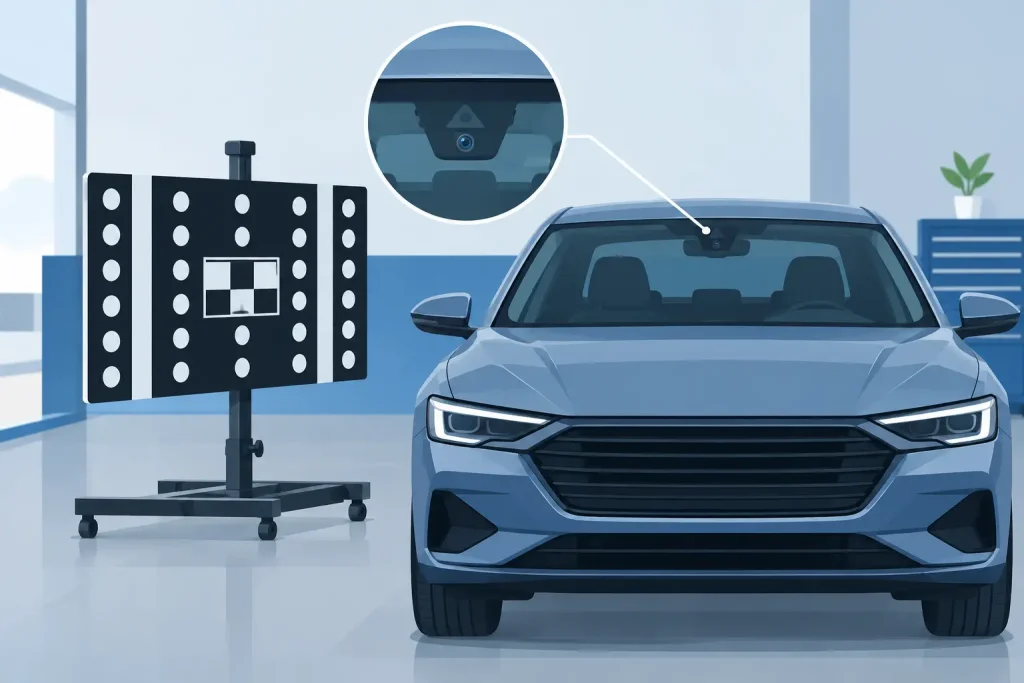
The forward-facing camera is commonly attached to the windscreen. Even a correctly installed replacement screen can sit slightly differently from the original, while the camera itself may be moved during the fitting process. Calibration sets the camera’s reference point again, so the system can judge distances, lane positions and objects correctly.
It is not an optional technical extra where the vehicle manufacturer requires it. It is part of returning the vehicle to a safe, usable condition following suitable glass work.
When is calibration needed after windscreen work?
A replacement windscreen is the most common reason for calibration. If the vehicle has a camera mounted to or looking through the windscreen, it will often need checking and recalibrating after the new glass has been fitted.
Calibration may also be necessary if the camera bracket, mirror assembly or camera unit has been disturbed or replaced. A heavy impact, collision repair, suspension work that changes vehicle ride height, wheel alignment issues or fault codes relating to the camera can also affect how the system reads the road.
It depends on the vehicle and its manufacturer’s procedure. Not every windscreen replacement requires the same process, and not every car uses a camera in the same way. A specialist should identify the vehicle’s fitted systems before work begins, rather than assuming that a camera is or is not present.
A windscreen chip repair will not usually require calibration if the camera and its mounting have not been affected. However, damage in the camera’s field of view can interfere with its vision. If the chip, crack, repair mark or internal condensation is close to the camera area, the system may not perform reliably even if no warning light is displayed.
Signs your vehicle may need attention
The clearest sign is a dashboard warning message relating to lane assistance, front camera, collision warning or driver assistance. Some vehicles will disable affected features until calibration is completed. Others may continue to operate with reduced functionality, which can be less obvious.
You may also notice that traffic sign recognition is missing signs, lane warnings are appearing unexpectedly, or automatic braking and cruise functions are unavailable. These signs do not always mean calibration alone is the answer. A dirty windscreen, damaged camera, wiring fault, incorrect replacement glass or a fault elsewhere in the vehicle can produce similar messages.
For that reason, the right approach is diagnosis first. Clearing a warning light without establishing the cause is not a repair.
How the calibration process works
The vehicle is first identified using its registration and specification, then checked for ADAS equipment and relevant manufacturer requirements. The replacement glass must be correct for the vehicle, including the proper camera area, tint band, heating elements, sensors and brackets where applicable. Using unsuitable glass can create problems before calibration even starts.
The camera area is cleaned, the camera is securely fitted and the vehicle is checked for fault codes. Calibration is then carried out using diagnostic equipment and the appropriate targets or road procedure.
Static calibration
Static calibration takes place in a controlled workshop environment. The vehicle is positioned on level ground, and calibration targets are placed at precise distances and heights in front of it. The diagnostic system communicates with the vehicle while the camera measures these targets and resets its reference position.
This method requires accurate equipment, enough working space and careful positioning. Small errors in target placement can affect the result, which is why it should be completed by trained technicians rather than treated as a quick dashboard reset.
Dynamic calibration
Dynamic calibration is completed while the vehicle is driven under specified conditions. The diagnostic equipment guides the process as the camera reads road markings, signs and traffic ahead. The vehicle may need to be driven on suitable roads at particular speeds for a set time before the system confirms completion.
Some vehicles use dynamic calibration only, while others require static calibration or a combination of both. Weather, faded road lines, heavy traffic and poor visibility can affect a dynamic procedure, so the time required can vary.
Why correct replacement glass matters
A windscreen is more than a sheet of glass. On vehicles with ADAS, it is part of the camera’s viewing path. The glass needs to be compatible with the vehicle’s camera system and fitted cleanly, with no contamination, distortion or obstruction in the camera zone.
A poor-quality fitting can cause water leaks, wind noise and visibility problems. On a camera-equipped vehicle, it can also complicate calibration. Adhesives must be allowed to cure correctly before the vehicle is returned to service, particularly where manufacturer safe-drive-away times apply.
This is one reason to use an automotive glass specialist for windscreen work. The job involves the glass, the bonding process, the camera system and the final safety checks. Treating those as separate issues risks unnecessary delay and repeat work.
Can you drive before calibration is complete?
The vehicle may still be driveable, but you should not rely on affected driver-assistance features until calibration has been successfully completed. The camera-based functions may be unavailable, limited or inaccurate. Your legal responsibility to drive with proper care and attention remains exactly the same.
If a dashboard warning indicates a safety system fault, arrange for it to be checked promptly. This is particularly relevant for drivers who cover high mileage, use motorways regularly, carry passengers or operate a business vehicle. Downtime matters, but so does returning the vehicle to work in the correct condition.
Do not try to calibrate a vehicle by adjusting the camera yourself or relying on an online reset method. Camera angles are measured very precisely, and a reset does not prove that the camera can see and interpret the road correctly.
Questions to ask when booking a replacement
When arranging windscreen replacement, tell the technician about any warning lights and any features your vehicle has, such as lane assist, emergency braking or road-sign recognition. If possible, mention whether the camera is located behind the rear-view mirror.
Ask whether your vehicle requires windscreen camera calibration, whether the process can be completed with the replacement, and whether there are any conditions that could affect turnaround time. A clear answer should cover the glass specification, fitting, calibration requirement and final confirmation that the work has been completed successfully.
For fleet operators, it is useful to record the replacement and calibration result against the vehicle. That gives drivers and managers a clear record of safety-critical work and helps when planning inspections or reporting future faults.
A warning light after glass work is worth acting on, not ignoring. Clear glass helps you see the road. A correctly calibrated camera helps your vehicle’s safety systems see it properly too.