
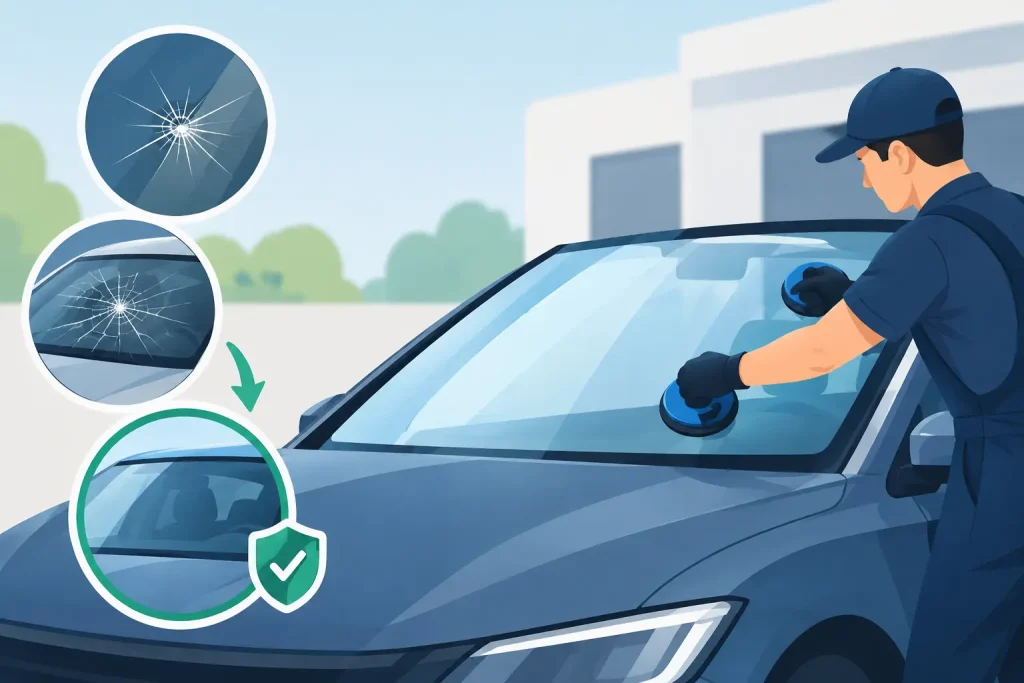
A small chip can become a long crack during one cold Scottish morning, especially after the heater comes on or the vehicle hits a pothole. Knowing when to replace damaged car glass helps you protect clear vision, keep the weather out and avoid finding that a manageable repair has turned into a roadside problem.
Not every mark means a new windscreen is needed. Many chips can be repaired quickly when they are small, stable and away from the driver’s main viewing area. The right decision depends on where the damage sits, how deep it is, whether it is spreading, and which safety systems are fitted to the vehicle.
When to replace damaged car glass rather than repair it
Replacement is normally the safer route when the glass can no longer do its job properly. A windscreen is not just there to block wind and rain. It contributes to the vehicle’s structure, supports the roof in a collision and provides a clear surface for cameras and sensors on many newer vehicles.
A crack that reaches the edge of the windscreen is a strong sign that replacement may be necessary. The edge is where the glass is held within the frame, so damage there can weaken the whole panel and is more likely to spread. Even a short edge crack can grow quickly as the body flexes during normal driving.
Cracks in the driver’s direct line of sight also need careful assessment. A repair may leave slight visual distortion, and that can be distracting when driving at night, in rain or against low winter sun. If the damage affects your ability to see the road clearly, do not wait for it to worsen.
Replacement is also usually needed where there are several chips, a long crack, damage on both layers of laminated glass, or a chip with missing glass and crushed edges. These faults are less likely to produce a dependable repair. A specialist can assess the damage in person and explain why repair is or is not appropriate before work begins.
Signs that your windscreen should not be ignored
The size of a chip matters, but its position and condition matter just as much. A small stone chip may be repairable if it is clean, recent and outside the critical viewing area. Once dirt and moisture enter the break, a strong and tidy repair becomes more difficult.
Arrange an assessment promptly if you notice any of the following:
- A crack is getting longer or has reached the edge of the glass.
- Damage sits in front of the driver or causes glare, blur or distortion.
- The windscreen is chipped in more than one place.
- The inner surface of the glass is damaged as well as the outer surface.
- Water is entering around the glass, or there is wind noise after previous work.
- A camera, sensor, heating element or aerial is located near the damaged area.
It is tempting to keep driving with a crack if it seems unchanged. The problem is that vehicle vibration, temperature changes and pressure from demisting can make it spread without warning. Covering a chip with tape may keep out dirt for a short journey, but it is not a repair and should not delay professional advice.
Damage and the MOT
A damaged windscreen can lead to an MOT failure if it seriously affects the driver’s view of the road or is judged to be unsafe. The exact result depends on the location, size and nature of the damage, so it is not sensible to rely on a rough rule of thumb from a friend or social media post.
More importantly, visibility should be dealt with before the MOT is due. A crack that catches headlights or sunlight can make a routine commute harder and less safe. If you are unsure, have the glass inspected rather than waiting for a test station to identify the issue.
Side and rear glass usually needs replacement
Side windows and rear screens behave differently from windscreens. Most side and rear vehicle glass is toughened rather than laminated. When it breaks, it typically shatters into many small pieces instead of holding together with an interlayer.
That means a cracked side window, a smashed quarter light or a broken rear screen will generally require replacement, not repair. The immediate concerns are security, weather protection and safe removal of loose glass. A vehicle left with an open or shattered window is vulnerable to theft and water damage, particularly if rain reaches door trims, switches, seats or electrical components.
Do not drive with loose fragments around the driver’s area or with a side window covered only by plastic unless it is essential to reach a safe location. Plastic is a temporary measure, not a weatherproof or secure fix. It can obstruct mirrors, flap in the wind and create further distraction.
Rear screens can add another complication. Many have heating elements, aerials, antennas or connections for camera systems. A correct replacement needs compatible glass and careful fitting so these features work as intended afterwards.
ADAS cameras make correct fitting more important
Many modern cars use a forward-facing camera near the rear-view mirror to support driver-assistance functions. Depending on the vehicle, it may be used for lane support, traffic-sign recognition, automatic emergency braking or adaptive headlights.
If the windscreen is replaced on a vehicle with these systems, calibration may be required after fitting. This checks that the camera can read the road accurately through the new glass. It is not an optional cosmetic extra. A camera that is not aligned correctly may provide unreliable warnings or assistance.
The need for calibration varies by make, model and equipment level. A specialist should identify whether your vehicle has an ADAS camera, use the correct windscreen specification and carry out the required diagnostic and recalibration work. Choosing glass purely on the lowest upfront price can be a false economy if it does not match the vehicle’s original features.
What to do after glass is damaged
First, make the vehicle safe. Park where practical, remove any loose items from the dashboard and avoid touching sharp glass. If a windscreen has a chip, keep the area dry and avoid pressing on it. Do not blast hot air directly onto cold damaged glass, as sudden temperature changes can extend a crack.
Take clear photographs of the damage from inside and outside the vehicle. They can help when arranging an assessment or speaking to an insurer. Note whether the crack has reached an edge, whether water is entering the car and whether a camera or sensor is positioned behind the glass.
You should also check your insurance policy before authorising work, particularly if you have windscreen cover. Policies vary on excesses, approved suppliers and whether a claim affects your no-claims discount. Do not let insurance paperwork delay a safety decision, however. If the vehicle is not safe to drive, arrange professional help first.
For a business vehicle, early action protects more than the glass. A delivery van, taxi or fleet car off the road can mean missed work and frustrated customers. Reporting damage promptly gives you more options for repair, replacement and scheduling.
Repair versus replacement: the practical choice
A windscreen repair is often the best outcome when damage is suitable. It can be quicker, cost less than replacement and retain the original factory-fitted glass. The goal is to stabilise the damage and improve its appearance, not to make every chip completely invisible.
Replacement is the better choice when safety, visibility or structural integrity is in doubt. It takes more work because the old glass must be removed, the bonding area prepared and the new screen fitted using the correct materials. The vehicle then needs enough time for the adhesive to cure before it is driven. Your fitter should give clear instructions on safe drive-away time and any aftercare.
There is no benefit in replacing glass that can be repaired safely. Equally, a cheap repair is not good value if the damage is unsuitable and the crack continues to spread. The right answer comes from a proper inspection, not from the size of the mark alone.
If you have a chip, crack, broken side window or leaking screen, act while the problem is still contained. Euro Windscreens can assess the damage and provide a clear repair or replacement recommendation, helping you get back to a safe, usable vehicle with as little disruption as possible.