
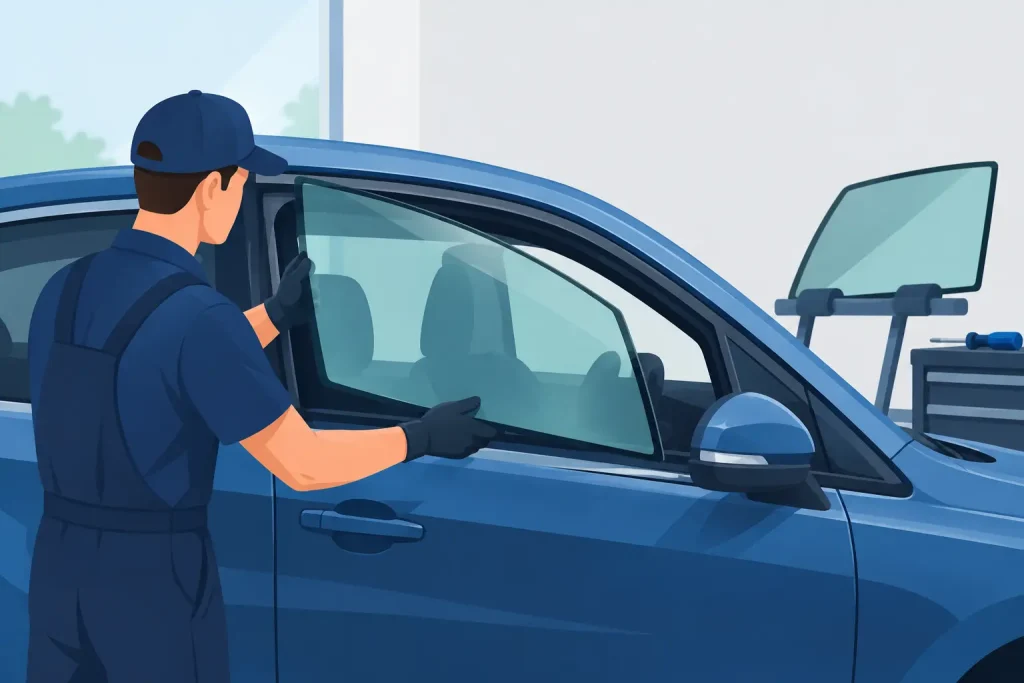
A broken side window is rarely just a glass problem. It can leave your car exposed to rain, theft and loose glass, while making an ordinary journey unsafe or impractical. Side window replacement for your car should restore more than the pane itself: the glass must fit properly, operate correctly where applicable, and leave the vehicle secure again.
Whether the damage followed a break-in, an accident or a failed window mechanism, acting promptly helps prevent a small disruption becoming a larger repair. Here is what to expect and what to check before your vehicle returns to the road.
When does a car side window need replacing?
Unlike a small windscreen chip, damage to a side window usually cannot be repaired. Most door and rear side glass is toughened safety glass. When it breaks, it is designed to shatter into many small, relatively blunt pieces rather than remain in one cracked sheet. Once this has happened, replacement is the safe route.
A side window may need replacing after vandalism or attempted theft, impact from road debris, a collision, or a fault in the window regulator that causes the glass to crack or drop into the door. Fixed quarter glass can also break following impact, even though it does not move up and down.
Some newer vehicles use laminated glass in the front side windows. Laminated glass can remain held together after impact, but cracks, holes and damaged edges still need professional assessment. A damaged laminated side window may compromise visibility, security and the glass’s ability to stay in place.
Do not assume that a window which still looks mostly intact is safe. Sharp edges, a loose pane or a crack spreading from the edge can worsen without warning, particularly when the door is closed or the vehicle travels over uneven roads.
Can you drive with a broken side window?
It depends on the location and extent of the damage, but a broken side window should be treated as urgent. Loose glass inside the door, on the seats or around the controls can cause injury. Rain can enter the cabin and door cavity, affecting trim, electrical switches and speakers. The open window also leaves the vehicle vulnerable when parked.
A temporary cover may keep out some weather for a short period, but it is not a substitute for proper side window replacement. It can restrict your view, detach in wind or leave an insecure gap. If the glass is shattered, there is a risk of more fragments falling while you drive.
For a vehicle to be roadworthy, the driver’s view must not be unnecessarily obstructed and the vehicle must be in a safe condition. The exact position of the damaged glass matters, but safety is the sensible deciding factor. If there is loose glass, poor visibility, an exposed opening or doubt about the vehicle’s condition, arrange replacement rather than continuing to use it.
What a proper side window replacement involves
The work differs depending on whether the damaged glass is a winding door window, a fixed rear side pane or a quarter light. A specialist will first identify the correct glass for the vehicle’s make, model, year and body style. This matters because glass shape, tint, heating elements, privacy treatment and fittings can vary between versions of the same car.
For a door window, the technician normally removes the interior trim carefully to access the regulator and mounting points. Broken glass is cleared from the door shell, window channels and seals. This stage takes time for a reason: fragments left inside can rattle, scratch the new glass or obstruct the mechanism later.
The replacement glass is then positioned in the regulator, aligned within its channels and tested through its full movement. The window should rise and lower smoothly, seal against the weatherstrip and sit correctly against the frame when closed. The technician also checks that the door handle, switches, central locking and any trim removed during the work are operating as they should.
Fixed side glass has a different fitting process. The old pane and bonding materials must be removed without damaging surrounding paintwork or trim. The aperture is prepared, compatible adhesive is applied and the new glass is fitted accurately. The adhesive needs the correct curing time before the vehicle is exposed to normal use, so follow the fitting advice you are given.
Why correct fitting matters after a break-in
After break-in damage, the obvious priority is replacing the missing window. Yet the detail of the fitting is just as important. A pane that is slightly misaligned may whistle at speed, allow water into the cabin or put excess strain on the regulator. An incorrectly refitted vapour barrier inside the door can allow moisture to reach the door card or footwell.
The window seals and channels also need inspection. A damaged rubber channel can cause the new glass to stick, move slowly or sit unevenly. If the regulator has been forced or the glass has fallen unexpectedly, it may need repair or replacement at the same time. Replacing the pane without addressing the underlying mechanism can lead to repeat trouble.
Vehicle glass is part of the car’s security. Correctly fitted side glass should close fully, resist normal movement and work with the vehicle’s locking system. That is particularly relevant for tradespeople, delivery drivers and families who may need to leave equipment or personal belongings in the vehicle.
What to do before the glass is replaced
If it is safe to do so, remove loose belongings from the vehicle and take photographs of the damage. These may help if you need to make an insurance claim or report a crime. Avoid sweeping broken glass into the door or down drainage holes. Large pieces can be carefully collected with gloves, but glass hidden in the door, seat runners and carpet is best dealt with during the repair.
If rain is expected, cover the opening only as a short-term measure. Do not tape directly onto painted surfaces for longer than necessary, as residue can be difficult to remove and some tapes may mark paint or trim. Keep the cover taut enough that it cannot flap into your line of sight.
When booking, provide the registration number, make and model, the damaged window location and whether it is a door glass or fixed pane if you know. Mention tinted or privacy glass, heated glass, acoustic glazing and any damage to the door or window mechanism. Accurate information helps the correct replacement glass be sourced and avoids delay.
Insurance, cost and timing
The cost of side window replacement depends on the vehicle, type of glass, availability and the condition of the surrounding components. A simple door glass replacement on a common model is often more straightforward than a fixed privacy-glass panel or a window with specialist features. If the regulator, seals or trim are damaged, these can affect the final work required.
Many comprehensive motor insurance policies include cover for vehicle glass, although the excess and claim process vary. Check whether side and rear glass are included, whether a claim affects your no-claims discount, and whether your insurer has specific requirements for authorising the work. Clear this up before the fitting where possible, rather than making assumptions about cover.
Timing also depends on glass availability. A specialist should be able to explain whether the required pane is readily available and whether the vehicle can be made secure while parts are arranged. For fixed bonded glass, allow for the stated safe drive-away time after fitting.
Checks to make when you collect the car
Before leaving, look at the glass from inside and outside the vehicle. It should be clean, securely fitted and free from obvious movement. On an opening window, operate it fully a few times and check that it closes evenly without catching or unusual noise. Check the door locks, handles and electric switches too.
Over the next few days, listen for wind noise and look for signs of water ingress after rain or a car wash. If the window moves slowly, sits unevenly or the door trim feels loose, contact the fitter promptly. Early attention is usually simpler than allowing the issue to develop.
Euro Windscreens approaches side glass work as a safety and security repair, not simply a pane swap. The aim is to leave you with a vehicle that closes, protects and works as it should.
A broken side window can disrupt work, school runs and everyday travel, but the right repair restores control quickly. Keep the vehicle secure, avoid relying on a temporary cover for longer than necessary, and make sure the replacement includes the careful fitting and checks that keep the glass dependable after you drive away.