
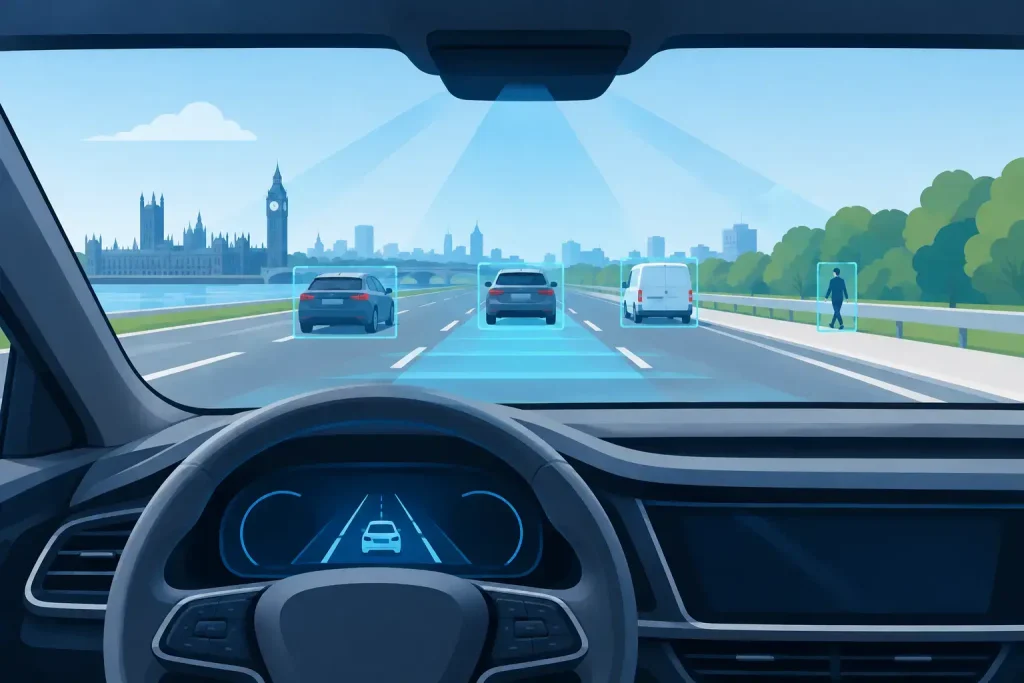
A windscreen is no longer just a barrier against rain, wind and road debris. On many newer vehicles, it is also the mounting point and viewing surface for cameras that support safety systems. That is why windscreen ADAS technology trends matter to any driver arranging a repair or replacement: the quality of the glass fitting can directly affect how the vehicle’s driver-assistance features perform.
A stone chip may still be a straightforward repair. But if damage spreads, sits in the driver’s line of sight or affects the area around a camera, the job needs a more careful assessment. Replacing the glass is only part of returning the vehicle to a safe, roadworthy condition.
Why the windscreen now matters to vehicle safety systems
ADAS stands for Advanced Driver Assistance Systems. These are the features designed to support the driver, such as lane departure warning, lane-keeping assistance, traffic sign recognition, adaptive cruise control, automatic emergency braking and forward collision alerts.
Not every system relies on the windscreen. Some use radar sensors, parking cameras or sensors mounted elsewhere on the vehicle. However, a forward-facing camera is commonly positioned behind the rear-view mirror, looking through a precise area of the windscreen. It needs a clear, accurate view of the road ahead.
That creates a practical change for windscreen work. The replacement glass must be correct for the vehicle specification, including any camera bracket, heating elements, acoustic layer, rain sensor mountings, aerials or heads-up display compatibility. The camera may then need recalibration once the new windscreen is fitted.
A windscreen can look perfectly fitted and still require this final technical step. The camera’s position may have altered by a very small amount during removal and refitting. For a system that judges lane markings, following distance or the position of vehicles ahead, that small change can affect its reference point.
Windscreen ADAS technology trends shaping repairs
The clearest trend is that camera-equipped windscreens are becoming normal across a wider range of cars and vans, not just premium models. Features once offered as expensive options are increasingly fitted as standard, particularly on newer vehicles with higher safety ratings.
For drivers, this means a replacement quote may include more than glass and fitting. It may also allow for diagnostic checks and camera recalibration. This is not an unnecessary add-on. It is work associated with restoring the operation of systems that may warn, assist or intervene when a hazard is detected.
Another trend is the growing use of multi-function windscreens. A single screen may support a camera, rain and light sensors, heated wiper park areas, solar-control coatings and acoustic insulation. Choosing a basic-looking alternative without the right specification can lead to warning lights, inoperative features or poor sensor performance.
Vehicle manufacturers are also changing calibration requirements more often. Two similar-looking models can have different camera set-ups, software versions or procedures. A proper assessment should use the vehicle registration and specification rather than assuming that all windscreens or calibration processes are the same.
Static and dynamic recalibration
There are two common approaches to camera recalibration. Static recalibration is carried out with the vehicle positioned precisely in a controlled area. Specialist equipment and calibrated targets are placed at measured distances and heights so the camera can reset its view correctly.
Dynamic recalibration takes place on the road. The vehicle is driven under suitable conditions while its system learns and confirms its reference points. Depending on the manufacturer, this may require clear road markings, appropriate speeds, good weather and a specific drive cycle.
Some vehicles need one method, while others require both. The correct process depends on the manufacturer’s instructions and the vehicle’s equipment. A short drive around the block is not automatically a calibration, and a warning light disappearing does not always prove every safety function has been fully checked.
Why correct glass and fitting are essential
The camera does not simply look through any piece of glass. Its performance can be affected by the shape, optical quality and specification of the windscreen, as well as the correct positioning of brackets and sensor mounts. A compatible windscreen is particularly important where the vehicle has a camera viewing area, special coatings or a heads-up display.
The fitting itself matters just as much. Modern windscreens form part of the vehicle body structure and help support the roof in a collision. They can also play a part in airbag performance, especially passenger airbags that deploy against the glass. The bonding process needs the right materials, preparation and curing time.
This is why drivers should avoid treating a cracked windscreen as a cosmetic issue. A crack can grow with vibration, temperature changes or a pothole strike. It can obstruct visibility, affect the camera’s view and leave the vehicle exposed to water ingress. If the damaged area is close to a camera or sensor, do not attempt a quick fix without professional advice.
Repair or replacement: what determines the right option?
A chip can often be repaired when it is small, stable and outside critical areas. Repair is usually the least disruptive option because the original factory-fitted windscreen stays in place and the camera position is not disturbed.
Replacement is normally the safer route where a crack has spread, damage is in the driver’s direct view, there are multiple chips, the glass is badly pitted, or the chip is close to the edge of the screen. Damage around a camera’s field of vision may also make replacement more likely, even if it appears minor from the driver’s seat.
It depends on the vehicle, the size and location of the damage, and the condition of the glass. A specialist should inspect the screen before promising a repair. Clear advice at this stage prevents wasted time and helps ensure the vehicle is returned in a condition that supports safe driving.
What to expect from an ADAS-aware windscreen service
The process should begin with identifying the vehicle correctly and checking whether it has camera-based safety equipment. The technician can then match the required windscreen specification and explain whether recalibration is likely to be needed after fitting.
Before work starts, ask whether the quote includes the correct glass, camera recalibration where required, and a final check for warning messages or fault codes. It is also sensible to ask about safe drive-away time. Adhesives need time to cure, and that period can vary with the product used and conditions on the day.
After the replacement, do not ignore dashboard alerts or assume that a driver-assistance feature will work exactly as before without confirmation. If the vehicle requires a calibration drive, follow the guidance provided. Keep the invoice and any calibration record with your service paperwork, particularly for fleet vehicles where maintenance records and downtime need to be controlled.
For businesses running vans, cars or mixed fleets, planning is becoming more important. A windscreen replacement may involve booking space for static calibration or allowing time for a dynamic procedure. The cheapest available fitting is not always the lowest-cost outcome if it leaves a vehicle off the road longer or creates a repeat visit.
A practical check before you book
When reporting windscreen damage, mention any dashboard camera symbols, lane-assist features, automatic braking alerts, rain sensors or a camera unit behind the rear-view mirror. If you are unsure, say so. The vehicle registration and a quick visual check will often help establish what is fitted.
Photographs of the damage can help with an initial assessment, but they should not replace an inspection where the crack is spreading, visibility is affected or the damage sits near a sensor area. Do not place stickers, mobile phone mounts or temporary coverings over the camera zone, as these can interfere with its view.
ADAS can be useful support, but it does not replace an attentive driver. The best result after windscreen damage is simple: clear visibility, correctly fitted glass and safety systems checked in line with the vehicle’s requirements. Acting early gives you more options and helps keep a small chip from becoming a longer, more disruptive repair.