
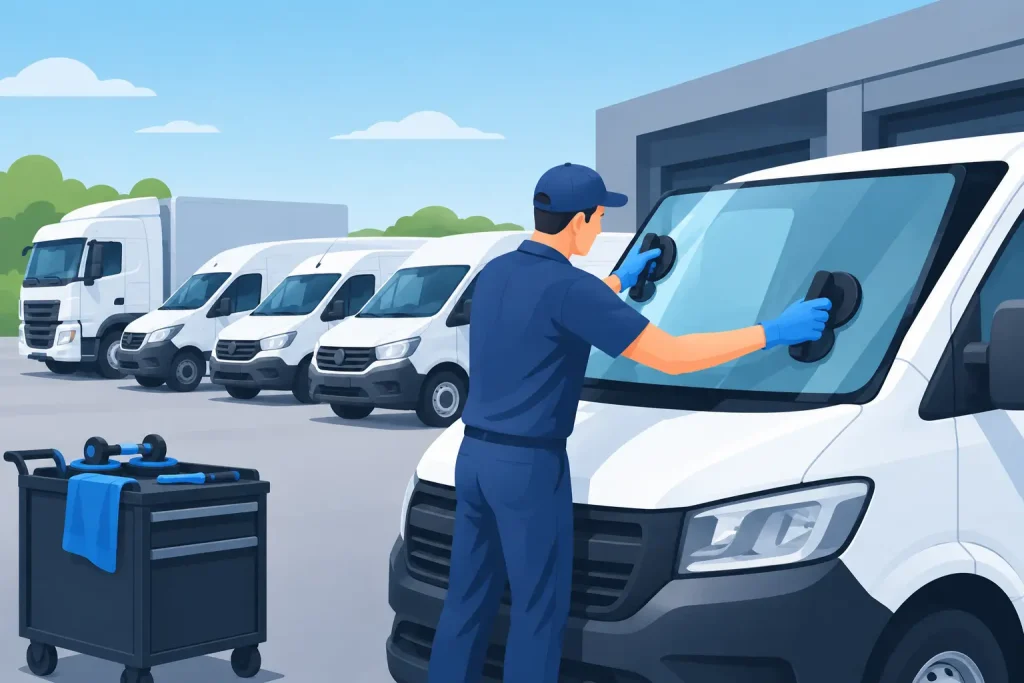
A cracked windscreen on one van can quickly affect a full day of work. A crack in the driver’s line of sight, shattered side glass after a break-in or water entering the cab can all take a vehicle out of service. A dependable fleet windscreen replacement service helps keep that disruption contained, so drivers can get back on the road safely and your operation can stay moving.
For fleet managers, the immediate question is rarely just whether the glass is damaged. It is whether the vehicle remains safe, legal and practical to use. The answer depends on the location and severity of the damage, the vehicle’s safety systems and the work it is scheduled to complete.
Why fleet glass damage needs a quick decision
Windscreen damage has a habit of worsening at the wrong time. Temperature changes, potholes, vibration, door slams and normal road movement can turn a small chip into a spreading crack. A vehicle that looked usable at the start of a shift may no longer offer clear, safe visibility by lunchtime.
The cost of waiting is often greater than the cost of acting. Downtime can mean missed deliveries, delayed appointments, replacement vehicle costs and pressure on other drivers to cover routes. There is also the risk of sending out a vehicle with compromised visibility or glass that is no longer secure in its frame.
For company cars, vans, taxis, minibuses and lorries, a clear windscreen supports more than the driver’s view. Modern vehicle glass can be connected to cameras and sensors that assist with functions such as lane support, automatic emergency braking and traffic-sign recognition. Where these systems are fitted, replacement work may need ADAS diagnostics and recalibration after the new screen is installed.
When repair is suitable and when replacement is the safer option
A chip does not always mean a new windscreen is required. Repair can be a sensible, lower-disruption option when the damage is small, stable and positioned away from the driver’s critical viewing area. It may restore the strength of the glass and stop the damage spreading, allowing a vehicle to return to service more quickly.
Replacement is normally the appropriate route where the windscreen is cracked, badly chipped, shattered or damaged near the edge. Damage in the driver’s direct line of vision also requires careful assessment. Even if a repair is technically possible, it may leave a visible mark that is unsuitable for safe driving or vehicle inspection standards.
Side and rear glass usually need replacement rather than repair. A smashed side window leaves the vehicle exposed to rain, theft and further damage, while broken rear glass can affect visibility and allow loose fragments into the vehicle. In these cases, securing the vehicle promptly is part of getting the fleet back under control.
The right decision should be based on the actual condition of the glass, not simply on the cheapest initial option. A specialist can assess the damage, explain the practical choices and recommend the work needed to return the vehicle to a safe, roadworthy condition.
What a fleet windscreen replacement service should cover
Fleet work is not just a series of one-off replacements. It requires a process that makes it easier to report damage, approve work and keep accurate records across multiple vehicles. The service should be built around reducing avoidable downtime without cutting corners on fitting or safety checks.
A good fleet windscreen replacement service starts with clear vehicle details. The registration, make, model, glass location and type of damage help identify the correct replacement glass. It is also useful to confirm whether the vehicle has a heated screen, rain sensors, camera equipment, aerials or other features built into the glass.
The fitting itself needs to be carried out with compatible materials and proper preparation. The windscreen is a structural part of many modern vehicles, so poor bonding or incorrect fitting can create problems with water ingress, wind noise and vehicle safety. Rushing the job may save minutes at the appointment but cause far more disruption later.
Where camera-based driver assistance systems are involved, recalibration should not be treated as an optional extra. A camera that has shifted slightly after replacement may not interpret the road as intended. The vehicle may require static recalibration, dynamic recalibration on the road, or both, depending on its manufacturer requirements.
Plan for the vehicle’s safe drive-away time
A newly fitted windscreen needs time for the adhesive to cure before the vehicle can safely return to use. This safe drive-away time varies according to the materials used, weather conditions and vehicle specification. It should be confirmed clearly before the driver or fleet controller schedules the vehicle’s next job.
This is one reason a planned approach works better than asking a driver to carry on until the last possible moment. If a vehicle can be booked in around a quieter part of the day, the effect on routes and staff can be much lower.
Practical steps for fleet managers after glass damage
The first priority is to make the vehicle safe. Ask the driver to stop using it if the windscreen damage obstructs their view, the glass is loose, or there are sharp fragments or an unsecured opening. If there has been a break-in, check for glass inside the cab, load area or seats before anyone enters or drives the vehicle.
Then record the essentials: the registration, current location, type of damage, photos where safe to take them, and any warning messages shown on the dashboard. This speeds up assessment and helps identify whether a camera, sensor or specialist glass is likely to be involved.
It also helps to decide what work the vehicle can realistically miss. A local service call, for example, may be moved to another driver while the affected vehicle is repaired. A delivery van carrying essential goods may need a replacement vehicle sooner. There is no single response that suits every fleet, but early decisions give you more options.
For repeat incidents, look for patterns. Vehicles that regularly travel on motorway routes, construction access roads or rural lanes may face more stone-chip risk. Drivers covering late shifts may be more exposed to break-ins. These trends can inform parking arrangements, route planning and the number of spare vehicles available.
Reducing repeated disruption across the fleet
You cannot prevent every stone chip or act of vandalism, but you can reduce the operational impact. Encourage drivers to report chips as soon as they notice them rather than waiting for a crack to spread. A small repair is generally simpler to arrange than an urgent windscreen replacement during a busy shift.
Keep vehicle specifications up to date, especially where newer models have cameras, sensors or heated glass. A simple fleet record that notes these features can make booking faster and reduce the chance of delays caused by incorrect glass being ordered.
It is also worth setting a clear reporting route for drivers. They should know who to contact, what information to provide and whether they are authorised to arrange urgent work. Uncertainty is what turns a manageable glass issue into lost working time.
For larger fleets, a consistent service partner can simplify communication and help create a clearer record of work completed. Euro Windscreens can assess damaged automotive glass, replace windscreens and other vehicle glass where needed, and support the diagnostics or recalibration required for applicable vehicles.
Questions to ask before approving replacement work
Before authorising the job, make sure the proposed work matches the vehicle and the damage. Ask whether repair remains suitable, whether replacement glass has the required features, and whether ADAS calibration is needed after fitting. You should also confirm the expected safe drive-away time and any restrictions on washing, driving or removing retention tape immediately afterwards.
Price matters, but it should be understood alongside the scope of work. A quote that appears lower may not include sensor transfers, mouldings, disposal, recalibration or the correct specification of glass. Clear pricing and a clear explanation of what is included make it easier to compare options properly.
The paperwork matters too. Keep records of the damage, work carried out and any calibration results. This supports fleet maintenance records and gives you evidence that a safety-related repair was handled appropriately.
A damaged windscreen should not be allowed to dictate the rest of the working week. Report it early, assess the vehicle properly and arrange the right repair or replacement. That gives your drivers a safer vehicle, your customers fewer delays and your fleet a better chance of staying on schedule.