
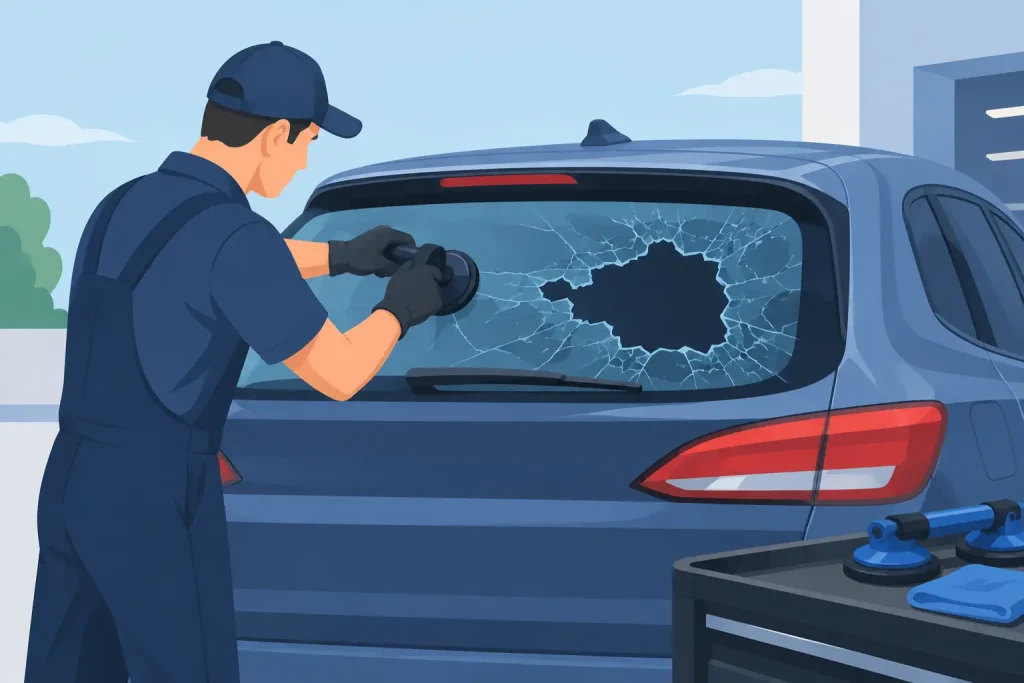
A shattered rear window is more than an inconvenience. It leaves your vehicle exposed to rain, theft and loose glass, while stopping the heated rear screen from doing its job. Rear glass repair is often the first term drivers search for, but in most cases a broken rear window needs a full, correctly fitted replacement rather than a chip repair.
The right next step depends on the type of damage, the glass fitted to your vehicle and whether it has connected features such as a heated screen, aerial or camera. Acting promptly protects the interior and gets the vehicle back to safe, practical use with less disruption.
What rear-window damage usually means
Most rear windows are made from toughened safety glass. Unlike a laminated windscreen, which may crack but remain largely in place, toughened glass is designed to break into many small fragments after a strong impact. A dropped object, vandalism, a collision or rapid temperature change can all cause it to fail.
Once toughened rear glass has shattered, it cannot be repaired. Even if much of the pane appears to be sitting in the frame, its strength has been lost and small pieces can fall into the car without warning. Replacement is the safe option.
Not every problem is a complete break. You may notice a crack around the edge, damaged heating lines, a loose rubber trim or water appearing in the boot after heavy rain. These issues still need inspection. Water ingress can damage carpets, trim, electrical connectors and the spare-wheel well, and a failed heated screen can make winter driving considerably harder.
Can rear glass repair fix a crack or chip?
A small windscreen chip can sometimes be repaired because the windscreen is laminated: two layers of glass hold an inner plastic layer between them. Rear windows are different. Their construction and built-in heating elements mean that resin chip repairs are generally not an appropriate or lasting solution.
If the rear glass is cracked, fractured, broken or no longer securely bonded, replacement is normally required. This is not unnecessary work. A new screen restores the barrier between the cabin and the weather, allows the rear demister to work and ensures the glass is properly retained in the vehicle body.
There are occasional exceptions. Some vehicles use laminated rear glass, particularly where extra sound insulation, privacy glazing or security features are specified. A specialist can identify the glass type and advise on the correct route. The key point is not to assume that a crack is safe simply because the glass has not fallen out.
What to do straight after rear glass breaks
Your priority is to prevent further damage and avoid injury. Loose fragments often collect on the rear seats, parcel shelf, boot floor and around door seals. They can continue to work free from the frame after the initial break.
If the vehicle is safe to approach, take these practical steps:
- Keep passengers, children and pets away from the broken area until loose glass has been removed.
- Avoid slamming doors or closing the boot with force, as pressure changes can dislodge more fragments.
- Remove valuable items and cover the opening temporarily if rain is expected, without obstructing the vehicle lights or number plate.
- Do not drive if glass is falling into the cabin, the opening affects your view or the vehicle cannot be secured properly.
A temporary cover can keep out the worst of the weather for a short period, but it is not a substitute for replacement. Thin plastic can tear, flap in the wind and allow moisture to enter. Avoid fixing tape directly to painted surfaces for long periods, as adhesive residue can be difficult to remove.
If the damage followed a break-in, photograph the vehicle and its contents before clearing away anything that may be relevant to an insurance claim. Then arrange for the glass to be assessed as soon as possible.
What a safe rear-glass replacement involves
Rear-window replacement is not simply a matter of placing a pane in the opening. The fitter must remove the remaining fragments carefully, prepare the aperture and fit glass that matches the vehicle specification.
Clearing the glass properly
Small pieces can travel further than expected. A thorough job includes clearing fragments from the boot, rear seating area, trims and seals, rather than only removing the visible pieces around the frame. This matters for families, passengers and anyone carrying work equipment in the vehicle.
Matching the correct glass
Rear screens can differ by tint, heating layout, aerial connections, privacy finish, mounting points and sensor equipment. The replacement glass must be compatible with the vehicle’s original features. A screen that physically fits but lacks the correct connections or heating pattern is not the right result.
Fitting and curing
Many rear screens are bonded into the body with specialist adhesive. The bonding surface must be clean and correctly prepared so the glass sits securely and seals against water. Adhesive also needs an appropriate curing period before the vehicle is used normally. The exact time varies with the vehicle, materials and weather conditions, so follow the fitter’s instructions rather than guessing.
A good fitting should leave the rear screen aligned, sealed and free from loose trims or visible gaps. The rear demister, aerial and any connected equipment should also be checked before the vehicle is handed back.
Heated screens, cameras and other connected parts
The horizontal lines on a rear screen are electrical heating elements. They clear mist and frost, which is particularly useful during Scottish winters and wet mornings. Damage to these lines can stop parts of the screen clearing or cause the whole system to fail.
Modern vehicles may also have a digital rear-view camera, a high-level brake light, a roof aerial or other wiring close to the rear glass. These components need to be handled correctly during removal and refitting. Not every rear-window replacement requires ADAS recalibration, as it depends on the vehicle and the location of its cameras and sensors. However, any safety-related system affected by the work should be checked and, where required, recalibrated to the manufacturer’s process.
This is one reason a specialist automotive-glass service is preferable to a makeshift repair. The visible glass is only one part of the job.
Cost, insurance and vehicle downtime
The cost of replacing rear glass varies with the vehicle make and model, glass specification and the equipment built into the screen. A basic heated rear window is usually more straightforward than glass with privacy tint, aerials, camera mounts or specialist trim.
If you have comprehensive motor insurance, accidental damage or vandalism to vehicle glass may be covered under a separate glass claim. Check your policy excess and whether it sets conditions on the repairer or claim process. It is also worth confirming whether the policy covers associated work, such as clearing broken glass or recalibrating a relevant system.
For drivers who rely on their car or van for work, availability matters as much as price. Providing the registration number, vehicle model and a clear description of the damage helps a glass specialist identify the correct replacement screen and plan the work. Mention any heated elements, camera equipment or aftermarket tinting at the outset.
Keeping the new rear window in good condition
After replacement, treat the area carefully during the advised curing period. Avoid high-pressure washing around the edges and do not pick at new trims or sealant. If a temporary retention tape has been applied, leave it in place for the period recommended by the fitter.
Use the rear demister normally once you have been told it is ready, but report any areas that do not clear, warning lights, water leaks or loose trim promptly. Early checks are simpler than allowing moisture to build up inside the vehicle.
A broken rear window creates an immediate problem, but it does not need to keep you off the road for long. Clear advice, the correct glass and careful fitting will restore security, weather protection and rear visibility so you can use your vehicle with confidence again.