
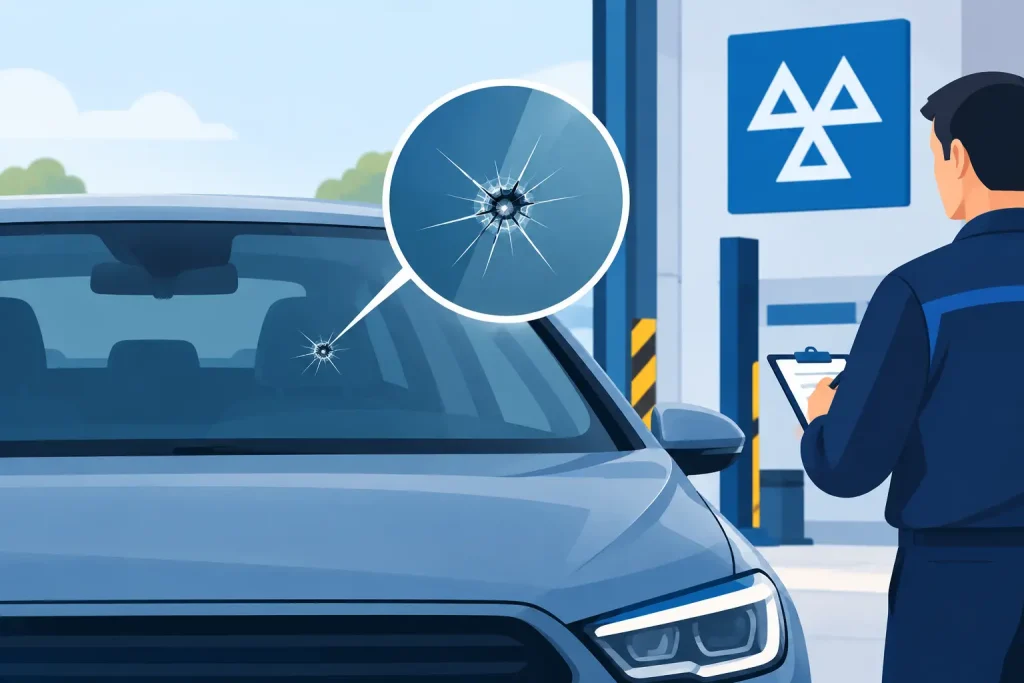
A small mark can become a windscreen chip MOT failure if it sits in the wrong place. The size of the chip matters, but so does its position in the area swept by the wipers. If it affects the driver’s view, waiting until test day can turn a straightforward repair into an unexpected fail and time off the road.
When does a windscreen chip cause MOT failure?
For an MOT, the tester checks damage within the windscreen’s swept area – the part cleared by the wipers. They use two assessment areas to decide whether the damage is serious enough to fail the vehicle.
Zone A: the driver’s main view
Zone A is the 290mm-wide section of windscreen directly in front of the steering wheel. It is the area where clear vision matters most when you are driving. A chip, crack or other damaged area larger than 10mm in Zone A is normally a reason for MOT failure.
Ten millimetres is about the width of a standard pencil. That is smaller than many drivers expect, which is why a chip that seems minor can still be a problem when it is directly in your line of sight.
The rest of the swept area
Outside Zone A, but still within the area swept by the wipers, windscreen damage over 40mm can lead to a fail. This applies to chips and cracks, including damage that has spread across the glass.
The rules are based on the size of the damaged area, not simply whether the glass is cracked. A short crack may be less disruptive than a large star-shaped chip, for example. The MOT tester will assess the actual condition and location of the damage on the day.
Damage outside the swept area is less likely to fail under these specific visibility rules. However, it should not be ignored. A crack near the edge of the glass can spread quickly, weaken the windscreen and create a larger problem before your next journey or test.
Why a chip can worsen before the MOT
Windscreens are under more pressure than they appear to be. Temperature changes, potholes, speed bumps, door slams and body movement all place stress on the glass. Water can enter a chip, while cold weather can cause that moisture to expand. A small impact mark can then develop into a crack with little warning.
The location of the damage also affects how likely it is to spread. Chips at the edge of a windscreen are often more troublesome because the glass is under greater stress around its perimeter. A chip in the driver’s view may remain small but still be unsuitable for repair if fixing it would leave distortion where you need the clearest view.
Do not rely on a temporary sticker or tape as an MOT solution. Covering a chip does not repair the glass, and it can make the affected area harder to inspect. It may also obstruct your view.
Repair or replacement: what is the right answer?
Many small chips can be repaired if they are dealt with promptly. During a repair, resin is introduced into the damaged area to stabilise the glass and reduce the appearance of the chip. The aim is to stop the damage spreading and restore the windscreen’s strength as far as possible.
A repair is not always appropriate. The decision depends on the chip’s size, type and position, as well as whether dirt or moisture has entered it. A windscreen specialist will also check for cracks running from the chip, damage at the edge of the screen, and signs that previous repair work has failed.
Replacement is usually the safer route when there is extensive cracking, damage in a critical viewing area, or a chip that cannot be repaired to a safe standard. Although replacement costs more than a repair, it removes uncertainty around visibility and the structural condition of the glass.
Modern vehicles may need more than new glass. If your car has a forward-facing camera behind the windscreen for lane assistance, emergency braking, traffic-sign recognition or similar systems, the camera may require ADAS recalibration after replacement. This confirms the system is correctly aligned with the new windscreen. Skipping this step can affect safety features even if the glass itself looks perfect.
What the MOT tester will look for
The test is not limited to measuring one obvious chip. The tester will consider whether windscreen damage affects the driver’s view and whether the windscreen can be safely assessed. Cracks, bulls-eyes, star breaks and poorly repaired areas can all be relevant.
They will also look at the windscreen wipers and washers. Wipers must clear the glass effectively, and washers must provide enough fluid to clean it. Smears, torn blades and an empty washer bottle are avoidable issues that can make it harder to see through an already damaged screen.
A windscreen can also attract attention where stickers, permits, sat-nav mounts or other items obstruct the driver’s view. Keep the area around the steering wheel clear, particularly before an MOT. The purpose is simple: you need an unobstructed view of the road ahead.
Check your windscreen before booking an MOT
A quick inspection a week or two before the test gives you time to arrange the right work. Clean the windscreen inside and out, then look at it in daylight from both the driver’s seat and outside the vehicle. Dirt can hide fine cracks, while reflected light often makes chips easier to spot.
Check whether the damage sits in front of the steering wheel and whether it falls inside the wiper sweep. Measure the widest part of the chip or crack carefully, but do not assume your own measurement guarantees an MOT outcome. The tester makes the final assessment using the current MOT standards and the condition of the vehicle presented.
If you find damage, avoid washing the vehicle with high-pressure equipment directly over the chip and do not use very hot water to clear ice from the glass. Sudden temperature changes can cause a crack to travel. Keep the damaged area clean and dry, then arrange a professional assessment as soon as practical.
For drivers who depend on their vehicle for commuting, deliveries, school runs or fleet work, early action usually means less disruption. A repair may be completed without taking the vehicle out of service for long. Leaving it until the chip spreads may mean arranging a replacement and, where fitted, camera recalibration.
What to do if your car fails for windscreen damage
An MOT failure for windscreen damage does not mean the vehicle is beyond repair. Read the failure wording on the test result, then have the glass inspected. The garage may identify the zone and measured damage, but a windscreen specialist can determine whether repair remains safe or replacement is needed.
Do not continue using a vehicle if the windscreen damage seriously restricts your view or compromises safe operation. The MOT result is one issue; your ability to see hazards, pedestrians and road signs clearly is the more immediate concern.
Once the appropriate work is complete, you can arrange a retest. Euro Windscreens can assess chipped or cracked automotive glass and explain the most practical route, including whether your vehicle needs recalibration after a replacement.
A windscreen chip is easiest to deal with before it spreads. Checking it before your MOT gives you a clearer choice: a timely repair where suitable, or a safe replacement before a small mark creates a bigger interruption.