
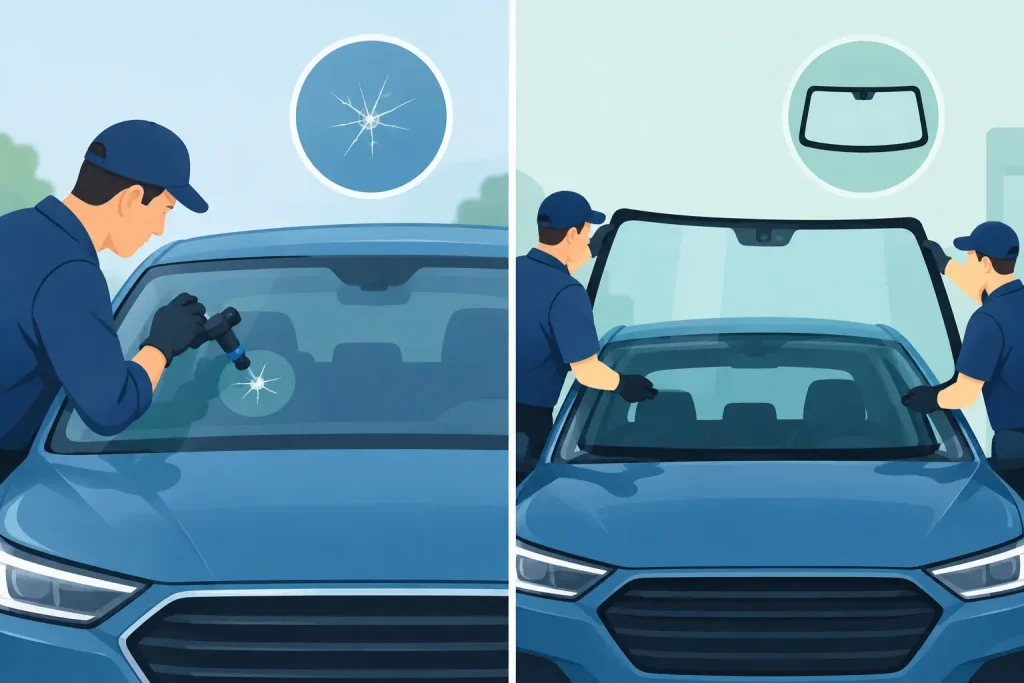
A stone chip can look minor when it first appears, then become a long crack after one cold night, a pothole or a change in temperature. Windscreen repair versus replacement is therefore not just a question of cost. It is a decision about clear visibility, vehicle safety and getting you back on the road without avoidable delay.
The right answer depends on where the damage is, how large it is, how long it has been there and which safety systems your vehicle uses. A specialist should inspect the glass before promising a repair, particularly where a camera or sensor sits behind the windscreen.
Windscreen repair versus replacement: what decides it?
A windscreen is made from two layers of glass bonded around a clear plastic layer. This laminated construction helps the screen stay together in an impact and contributes to the strength of the vehicle body. Damage needs to be assessed properly because a chip that looks small on the outside may extend further into the glass.
Repair is normally the preferred route when the damage is localised, stable and away from the driver’s main line of sight. A technician cleans and prepares the damaged area, injects a specialist resin and cures it to stabilise the glass. The aim is to stop the chip spreading, reduce its visibility and retain the original windscreen.
Replacement is the safer option when the glass cannot be reliably restored. That may be because the crack is too long, the chip has broken through more than one layer, the damage reaches the edge of the screen or there are several damaged areas. Damage close to the edge deserves particular care, as this is where the windscreen is bonded to the vehicle and stress can cause cracks to spread quickly.
When a repair is likely to be suitable
A fresh stone chip is often repairable if it is small and has not developed into a crack. The shape matters as well as the diameter. Simple bullseye or star-shaped chips can often be treated, while complex breaks with several legs may be less predictable.
Location is just as important. A repair may leave a slight mark, even when the work is successful. For that reason, damage in the driver’s direct field of vision may require replacement rather than repair if it could distract from the road ahead. Dirt and moisture can also affect the result, which is why arranging an inspection promptly is sensible.
Repair usually takes less time than fitting a new windscreen and avoids removing original factory-fitted glass. It is not always the cheapest option in every insurance arrangement, but it can reduce downtime and prevent a small problem becoming a larger one.
When replacement is the better choice
A crack needs more than a quick visual check. It may have started from a small chip, but once it travels across the screen, the strength and reliability of a resin repair are limited. Replacement is normally recommended for long cracks, cracks spreading from the edge, significant impact damage and glass with damage on both layers.
You should also expect replacement after a break-in, collision or heavy impact. If the windscreen is shattered, badly scratched or leaking, fitting new glass is the practical route to restoring weather protection and visibility.
The same principle often applies to side and rear glass. Unlike a laminated windscreen, much side and rear glass is toughened and breaks into small pieces when damaged. It is generally replaced rather than repaired. Some newer vehicles use laminated side or rear glazing, so the vehicle should always be assessed on its own specification.
Visibility and MOT requirements
A damaged windscreen can cause an MOT failure when it obstructs the driver’s view. In the driver’s central viewing area, commonly called Zone A, damage larger than 10 mm can fail. Outside that area, damage larger than 40 mm can also fail.
Those measurements are useful guides, but they should not be treated as a reason to wait. A smaller chip can still be distracting, and it can spread without warning. Light reflecting through a repaired or damaged area may be particularly noticeable at night, in low winter sun or during wet-weather driving.
If you drive for work, carry passengers or regularly use motorways, clear vision is not something to leave until the next MOT. Deal with damage while it is contained, rather than when it has become a crack that takes the vehicle off the road.
Why correct fitting matters with modern vehicles
A replacement windscreen is a safety-critical installation, not simply a pane of glass placed into a frame. The correct glass must match the vehicle, including its tint, heating elements, acoustic layer, aerial connections and mountings for cameras or sensors. The bonding surface must be prepared correctly, and the approved adhesive must be allowed to cure for the specified safe drive-away time.
Many vehicles now have Advanced Driver Assistance Systems, or ADAS, mounted behind the windscreen. These may support lane-keeping assistance, automatic emergency braking, traffic-sign recognition and adaptive cruise control. If the camera position changes even slightly during a windscreen replacement, the system may not interpret the road as intended.
That is why ADAS recalibration may be required after replacement. The exact process depends on the vehicle. Some systems need a static recalibration using diagnostic equipment and targets; others require a controlled road procedure, and some require both. A warning light is not the only sign that recalibration is needed. The requirement can apply even when no fault is shown on the dashboard.
A proper replacement process includes checking the vehicle specification, fitting compatible glass and confirming whether recalibration is required. This is not an optional extra where the manufacturer calls for it. It is part of returning the vehicle to safe operating condition.
What to do as soon as damage happens
If the screen is still intact, avoid pressing on the damaged spot or washing it with very hot water in cold conditions. Sudden temperature changes can encourage a crack to spread. Keep the area as clean and dry as possible, and avoid sticking tape directly onto the damaged glass if it could leave residue.
Make a note of where the damage is and whether it has changed. A clear photograph can help when speaking with an insurer or arranging an assessment, but it is not a substitute for an in-person inspection. A technician needs to examine the depth, position and condition of the break.
If the damage affects your view, the glass is loose, or the screen has shattered, do not continue driving unless it is clearly safe and legal to do so. Broken glass, poor visibility and water entering the vehicle can quickly turn a manageable issue into a safety problem.
Cost, insurance and downtime
The cheapest-looking option is not always the best value. Repair can be quicker and may carry a lower insurance excess than replacement, depending on your policy. Replacement costs more because it involves new glass, specialist bonding materials, fitting labour and, where needed, ADAS diagnostics and recalibration.
However, replacing a screen that is beyond repair is not wasted spend. Trying to preserve damaged glass that is likely to crack further can lead to a second visit, more lost time and a vehicle that remains unsafe to use. Ask for a clear explanation of the recommended work, the expected safe drive-away time and whether any camera recalibration is included.
For fleets, delivery drivers and tradespeople, planning around downtime matters. Giving the vehicle registration and details of the damage when booking helps the correct glass and equipment be prepared before the appointment. That reduces the chance of delays and helps put the vehicle back into service sooner.
A chip does not always mean a new windscreen, and a crack does not always need to become an emergency. The sensible next step is a prompt assessment: protect the glass from further damage, get a clear recommendation and choose the work that keeps your view of the road safe.