
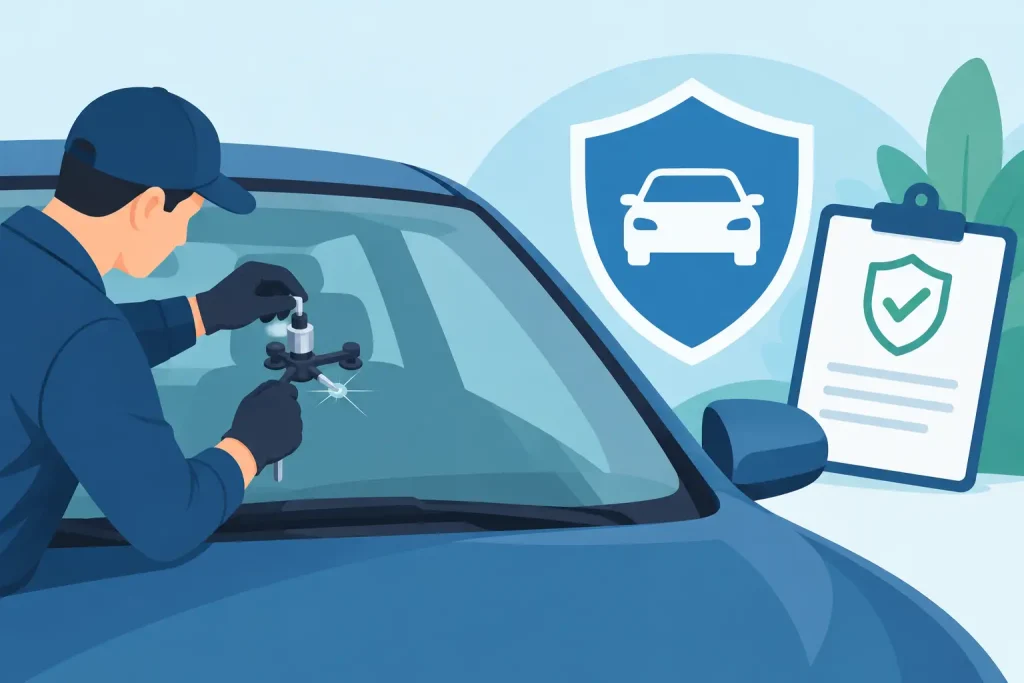
A stone chip can look minor at the roadside, but the decision you make next can affect more than the glass. Does windscreen repair affect insurance? Sometimes, but not always in the way drivers expect. The answer depends on your policy, whether you make a claim, the type of work needed and your insurer’s rules on no-claims discounts.
For many UK drivers, windscreen cover is designed to deal with damage quickly and separately from a standard accident claim. A repair may carry a small excess or no excess at all, while a replacement often has a higher contribution. However, cover levels vary, so it is worth checking your policy wording before authorising work or assuming a claim will have no wider effect.
When windscreen repair is covered by insurance
Windscreen damage is commonly covered under a comprehensive motor policy. This can include a chip caused by loose road debris, a crack that has spread across the screen, or damage from attempted theft. Cover may extend to side and rear glass too, although the terms can differ.
Insurers often prefer a repair where it is safe and suitable. Repairing a small chip is usually less expensive than replacing a full windscreen, gets the vehicle back on the road sooner and avoids wasting serviceable glass. If the damage is outside the driver’s main line of vision, has not spread, and can be repaired to a safe standard, this may be the most straightforward option.
A replacement becomes necessary when damage is too large, reaches the edge of the glass, obstructs the driver’s view, or affects the screen’s structural integrity. Modern windscreens can also contain cameras and sensors used by driver-assistance systems. In these cases, correct fitting and, where required, recalibration are part of returning the vehicle to safe operation.
Does windscreen repair affect insurance premiums?
A windscreen claim does not automatically increase your premium or reduce your no-claims discount. Many insurers treat glass claims separately from fault claims, particularly where only a chip repair is needed. That said, there is no single rule that applies to every policy.
Your insurer may record the claim even if it does not affect your current no-claims discount. When you renew, insurers can use different pricing models and may ask about claims history, including windscreen claims. A single glass repair is unlikely to have the same impact as an at-fault collision claim, but repeated claims within a short period can be viewed differently.
The practical point is simple: do not rely on a general promise that a glass claim is always ‘free’ or has no effect. Check whether your policy says windscreen claims are excluded from no-claims discount calculations, and ask whether they must be declared at renewal or when obtaining future quotations.
Excesses and why repair is often treated differently
The excess is the amount you pay towards a claim. With windscreen cover, insurers commonly set separate excesses for repair and replacement. A repair excess may be lower because the work costs less. Some policies waive it entirely when an approved repairer can restore the glass safely.
Replacement excesses are usually higher. The final cost can also be affected by the type of vehicle and glass required. Heated screens, acoustic glass, panoramic windscreens, rain sensors and ADAS cameras can all make replacement more involved than fitting a basic screen.
Before booking, ask the insurer or repairer to confirm three things: whether the work is being processed as an insurance claim, the excess you will pay, and whether calibration is included where your vehicle requires it. This avoids a surprise bill and helps ensure there is no gap between the work authorised and the work needed.
Claiming through insurance or paying privately
Insurance is not always the right route. If your excess is close to the private repair price, paying directly can be simpler. This is particularly true for a small chip repair where you want to avoid making a claim record, even if the policy says it will not affect your no-claims discount.
On the other hand, insurance can be valuable where a windscreen needs replacing or other vehicle glass has been broken. The cost of suitable replacement glass, specialist fitting, mouldings, sensors and calibration can add up. For a business vehicle, the benefit of getting the job organised promptly may matter as much as the saving itself.
There is also a safety consideration. Do not delay a repair simply to avoid a claim if the damage is spreading or distracting you while driving. A crack can grow quickly with road vibration, temperature changes and use of the heated screen. What begins as a repairable chip can become a replacement job.
Approved repairers and your choice of service
Some insurers use an approved repairer network. Using that network can make authorisation and payment more straightforward, as the repairer can often deal directly with the insurer. It may also be a condition of receiving the full level of cover stated in the policy.
You may still have a choice, depending on your insurer and policy. If you use a repairer outside the network, check whether the insurer needs to approve the work first, whether it will pay the repairer directly, and whether any contribution limit applies. Never assume that a policy will reimburse the full invoice afterwards.
The quality of the work matters regardless of how it is paid for. A windscreen supports the vehicle roof structure and provides a mounting surface for safety equipment. Correct bonding, compatible glass and careful sensor calibration are not optional extras. They are part of a safe repair or replacement.
What to do after windscreen damage
Start by looking at the damage without trying to press, pick or clean it aggressively. If possible, keep the damaged area dry and free from dirt. A clear photograph can help when speaking to an insurer or repair specialist, particularly if a crack develops before the appointment.
Give accurate vehicle details, including registration, make, model and any visible camera or sensor equipment near the rear-view mirror. If you know the cause of the damage, such as a stone strike or break-in, provide that too. It helps the insurer and repairer identify the right route and the likely glass specification.
If the damage is in your direct line of sight, the screen is badly cracked, or the glass is shattered, avoid driving until you have received professional advice. Visibility can be compromised even where the vehicle still appears usable. For side or rear glass, remove loose fragments carefully only if it is safe to do so, and protect the vehicle interior from weather while arranging assistance.
Insurance, roadworthiness and MOT concerns
Insurance cover does not change the requirement to keep your vehicle roadworthy. A windscreen chip or crack can lead to an MOT failure if it is in the driver’s view and exceeds the permitted size, or if other damage seriously affects visibility. The rules are based on the size and position of the damage, not whether you intend to claim on insurance.
This is one reason prompt assessment is useful. A specialist can establish whether the glass can be repaired, whether replacement is needed, and whether an ADAS recalibration check is required afterwards. That gives you a clear basis for deciding how to pay rather than guessing from the appearance of the damage.
For fleet operators, it is sensible to keep a record of glass incidents, repairs and calibrations. It supports vehicle maintenance planning and can make future insurance discussions easier. Drivers who cover high motorway mileage may also benefit from reporting chips early, before a small issue causes unexpected downtime.
A chip is rarely convenient, but dealing with it early gives you more control. Check your cover, confirm the excess, and choose safe work that matches your vehicle’s needs. Whether you use insurance or pay privately, the priority is the same: clear vision, correctly fitted glass and a vehicle you can rely on when you set off.