
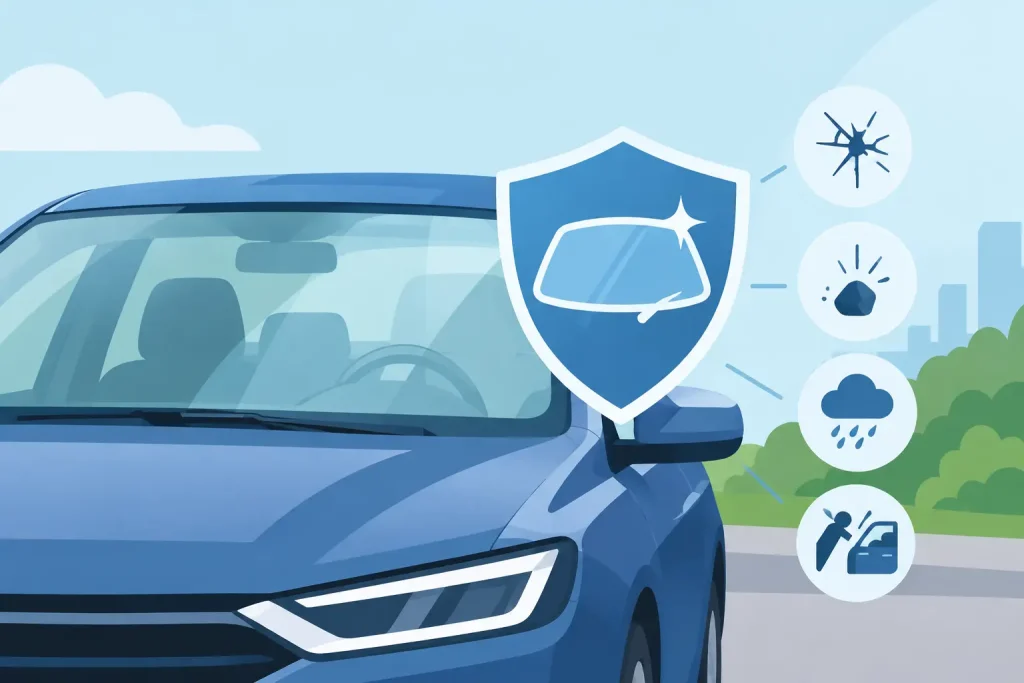
A stone chip can look minor when it first appears, then spread across the windscreen after a cold night, a pothole or a change in temperature. Vehicle glass insurance is designed to deal with this sort of damage, but the detail of the cover matters. Your policy may pay for a repair, replacement glass, fitting and recalibration, yet an excess or claim condition can still apply.
The sensible first step is to check the damage and your policy wording before booking work. A chip in the driver’s line of vision, a crack that is growing or shattered side glass should not be left until it becomes a bigger safety and cost problem.
What vehicle glass insurance can cover
Glass cover is often included with comprehensive motor insurance. It may also be available as an added feature on some policies. It commonly covers accidental damage to the windscreen, rear window and side windows, whether it comes from road debris, vandalism, a break-in or an accident.
For a repairable windscreen chip, insurers will often cover the full cost or charge a lower excess than they would for a replacement. Repair is usually the quickest route where it is safe and suitable. It preserves the original factory-fitted glass and can prevent a small impact mark becoming a crack.
When glass cannot be safely repaired, cover may include replacement glass and professional fitting. This can involve more than simply removing broken glass and fitting a new screen. Modern windscreens may carry cameras, sensors, heating elements, aerials and heads-up display components. The vehicle may need ADAS recalibration after fitting so systems such as lane support, emergency braking or traffic-sign recognition continue to work as intended.
Do not assume every policy includes every related cost. Ask whether the cover includes mouldings, trims, camera recalibration, glass disposal and any mobile fitting charge. A clear answer before work starts helps avoid an unexpected bill.
Repair or replacement: what decides the right option?
A specialist will assess the size, position and type of damage, as well as the condition of the glass around it. A small chip away from the driver’s direct view can often be repaired. A long crack, damage near the edge of the windscreen or a chip that has penetrated multiple layers is more likely to require replacement.
Location matters as much as size. Even a small repair can leave a faint mark. If it falls in the area you need to see clearly through the windscreen, replacement may be the safer option. Damage around cameras and sensors also needs careful assessment because the glass and vehicle safety systems work together.
Side and rear windows are normally made from toughened glass. Once broken, they tend to shatter rather than crack in the way a laminated windscreen does. These panels generally need replacement, along with a proper clean-out of glass fragments from the vehicle.
A repair may be less disruptive and may carry a lower insurance excess. Replacement restores a badly compromised screen but can take longer, particularly when specialist glass or recalibration is required. The right choice is not simply the cheapest one. It is the one that returns the vehicle to a safe, roadworthy condition.
Excess, no-claims discount and policy limits
Your glass excess is the amount you pay towards the work. Many insurers set a different excess for windscreen repairs and replacements. For example, a repair may have no excess while replacement requires a contribution. The exact amount depends on the policy, not the glass company.
A windscreen claim often does not affect a no-claims discount, but this is not universal. Some policies treat glass claims separately, while others may record them when calculating future premiums. Check the policy booklet or speak to the insurer if this affects your decision.
There can also be limits on how many glass claims you can make in a policy year, restrictions around approved repairers, or requirements to report the damage before work begins. If you use a provider outside an insurer’s approved network, the insurer may limit what it pays or ask you to pay first and reclaim the cost. That does not automatically mean you cannot choose a specialist, but it is worth confirming the process in advance.
When to contact your insurer
Contact the insurer as soon as you know the damage may need repair or replacement. Have your registration number, policy details, the type of damage and the approximate location ready. Photographs can help, especially if there is a crack, smashed side window or suspected vandalism.
Ask three practical questions: is the damage covered, what excess applies, and is ADAS recalibration included if your vehicle needs it? Also ask whether the insurer will authorise the work directly or whether you need a claim reference number.
If the damage followed a theft or attempted break-in, the insurer may ask for a crime reference number. Report the incident to Police Scotland or the relevant police force where appropriate. Do not leave broken glass or a vehicle that will not secure unattended while waiting for the claim process.
Do not keep driving if visibility or safety is affected
A windscreen is not just there to keep rain out. It supports the roof structure and provides a clear view of the road. A badly cracked windscreen can create a serious visibility problem, particularly in low sun, darkness and wet weather.
UK roadworthiness rules require drivers to have a clear view ahead. Damage in the driver’s swept area can lead to an MOT failure if it is severe enough to obstruct the view. A vehicle with unsafe glass may also be unsuitable to drive, regardless of whether an insurance claim has been opened.
If the screen is cracked across your main field of vision, the glass is loose, a side window has shattered or rain is entering the vehicle, arrange professional help promptly. For delivery drivers, taxi drivers, fleet vehicles and anyone who relies on their car for work, quick action can also reduce unplanned downtime.
Why correct fitting and recalibration matter
The quality of a glass repair or replacement affects more than appearance. Correct preparation, compatible bonding materials and accurate installation help maintain weather sealing, visibility and the structural role of the windscreen.
Where a camera or sensor is mounted to the windscreen, recalibration is a safety requirement rather than an optional extra. Replacing the glass can alter the position from which the camera reads the road. Without the correct diagnostic checks and recalibration where required, driver-assistance features may not respond accurately.
This is why it is useful to tell the glass specialist about warning lights, camera-based features, heated glass, rain sensors or a heads-up display when arranging work. The vehicle registration will identify much of the specification, but details help ensure the correct glass and process are planned from the start.
Euro Windscreens can assess the damage, explain whether repair or replacement is appropriate, and carry out the fitting and recalibration work required for the vehicle. If you are claiming, keep the insurer’s authorisation or claim reference available when you book.
A practical check before you book
Before arranging the work, confirm your excess, whether the policy directs you to an approved provider and whether replacement or repair has been authorised. Remove valuables from the car, especially after a break-in, and make sure the specialist can access the vehicle safely.
Avoid using tape, household glue or DIY repair kits on damage that needs professional assessment. They can make a repair harder, trap moisture or leave residue in the damaged area. If the vehicle must stay outside before an appointment, cover a broken side or rear opening securely without blocking doors, lights or mirrors.
Small glass damage rarely improves with time. Acting early gives you more chance of a straightforward repair, a clearer insurance decision and a vehicle that is ready for the road again.