
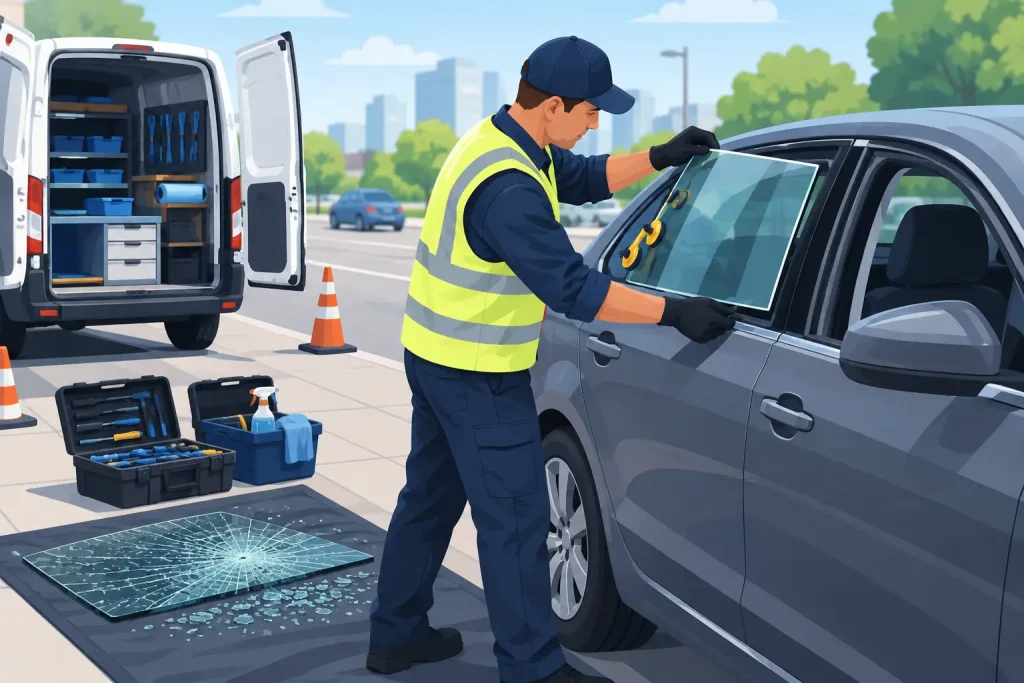
A smashed side window changes your plans in seconds. Emergency broken car window repair is not only about replacing glass – it is about securing the vehicle, clearing dangerous fragments and getting you safely back on the road or back to work.
Whether the damage followed a break-in, an attempted theft, a collision or a falling object, avoid treating it as a simple cosmetic problem. Broken vehicle glass can leave sharp edges around the frame, loose fragments in seats and door pockets, and an opening that exposes the interior to rain and further theft. The right next step depends on which pane is damaged, how secure the vehicle is and whether it can be driven safely.
What to do straight after a car window breaks
Start by moving yourself and any passengers away from the broken glass. If the incident has happened on a live road, at the roadside or after a collision, deal with the immediate hazard first. Move to a safe place if the vehicle remains driveable and it is safe to do so.
Do not run your hands around the window frame or try to pull out loose glass. Side and rear windows are usually toughened glass, which breaks into many small pieces. Those pieces may look harmless, but they can still cut skin and work their way into clothing, upholstery and door mechanisms.
Take clear photographs of the damage before cleaning up. This can help if you need to report a break-in, speak with your insurer or document damage to a company vehicle. If personal belongings have been stolen, contact the police through the appropriate non-emergency route unless there is an immediate danger.
Then focus on four practical actions:
- Keep children, passengers and pets clear of the affected area.
- Remove loose items from the seats, footwells and door bins without handling glass unnecessarily.
- Cover the opening temporarily only if it can be done safely and without obstructing mirrors or the driver’s view.
- Arrange specialist vehicle-glass assistance as soon as possible.
A temporary cover can reduce rain ingress for a short period, but it is not a repair. Household tape and thin plastic often come loose, trap moisture or flap across the opening while driving. They can also make it harder for a technician to access the frame cleanly.
Is it safe to drive with a broken car window?
It depends on the location and extent of the damage. A completely shattered side window may leave the driver with clear forward vision, but that does not automatically make the vehicle safe or sensible to drive. Loose glass, exposed edges, bad weather, reduced security and wind noise can all affect control and concentration.
If the windscreen is cracked in the driver’s line of sight, heavily shattered or carrying damage that obstructs your view, do not drive. The windscreen is a structural part of the vehicle and supports the roof area in many modern cars. Damage can also interfere with camera-based safety systems mounted behind the glass.
A broken rear window creates its own risks. It may reduce rearward visibility, allow exhaust fumes or rain into the cabin and leave glass around the boot area. If a vehicle relies on an interior rear-view mirror because its door mirrors are unavailable or compromised, rear glass damage can be especially problematic.
For any damaged pane, check that the doors close properly, no glass is falling from the frame and the driver has a clear view of the road and mirrors. If there is doubt, leave the vehicle parked securely and arrange recovery or mobile assistance. Losing a few hours is better than turning a security problem into an accident or further damage.
Why a specialist repair matters
Vehicle glass is fitted for more than keeping out the weather. Correctly installed glass helps maintain visibility, cabin security and the vehicle’s designed structure. The adhesive, trim, clips and glass specification must suit the vehicle.
A side window replacement may look straightforward, yet the glass often sits inside the door beside the regulator, weather seals, wiring and locking components. If fragments remain inside the door, they can cause rattles, damage moving parts or block drainage channels. A proper repair includes removing the broken glass from the door cavity as well as replacing the visible pane.
Windscreen replacement is more technical still. Many newer vehicles have forward-facing cameras, sensors or heating elements attached to or positioned behind the windscreen. After replacement, the vehicle may need ADAS diagnostics and recalibration so systems such as lane support, traffic sign recognition or automatic emergency braking work as intended. This is not an optional extra where the manufacturer’s procedure requires it.
At Euro Windscreens, the focus is on identifying the right repair or replacement route for the vehicle, fitting compatible glass correctly and checking the work before the vehicle returns to use. That helps avoid the false economy of a quick fitting that leads to leaks, wind noise or safety-system warnings later.
Repair or replacement: what is likely?
A small stone chip in a windscreen can sometimes be repaired if it is addressed promptly, is away from the driver’s critical viewing area and has not spread into a significant crack. Repair can preserve the original windscreen and usually involves less downtime.
A smashed side or rear window normally requires replacement. Toughened glass is designed to break apart rather than remain cracked in place, so there is generally no sound surface to repair. A large crack, edge damage or damage in the driver’s view may also mean a windscreen replacement is the safer option.
The technician will consider the make and model, glass type, damage position and fitted equipment. Features such as acoustic glass, solar control, heating, rain sensors, cameras and antennas can affect the specification. Choosing the correct glass is not about adding complexity – it is about making sure the replacement performs as the vehicle was designed to perform.
Preparing your vehicle for emergency broken car window repair
You do not need to deep-clean the car before help arrives. In fact, trying to vacuum every fragment with domestic equipment can be difficult and may spread pieces further into the cabin. Remove valuables and personal items if you can do so safely, then leave the area accessible.
Tell the glass specialist the vehicle registration, make, model and year, plus which window has broken. Mention any visible features in the glass, such as a heated rear screen, a windscreen camera, sensor housing or aerial lines. If the damage was caused by a break-in, say whether the door, lock or window mechanism has also been affected.
For fleet, delivery and trade vehicles, explain the operational need as well. A van with broken side glass may be technically movable but unsuitable for carrying tools, stock or confidential equipment. Planning the repair around security and downtime can be as important as the glass itself.
If rain is expected, keep the vehicle under cover where possible. Avoid slamming the affected door, as vibration can dislodge more fragments. Do not operate the electric window switch repeatedly if the glass has fallen into the door, because the regulator may be obstructed or damaged.
After the replacement
Once the new glass is fitted, follow the technician’s advice about adhesive curing, washing the vehicle and operating windows or doors. Where bonding adhesive has been used, cure time matters. The vehicle should not be treated as fully ready until the stated safe drive-away time has passed.
Check that the window opens and closes correctly where applicable, the seals sit evenly and any warning lights are addressed. With a windscreen replacement, ask whether calibration was required and completed. If you notice wind noise, water ingress, a rattle in the door or a fault message afterwards, report it promptly rather than waiting for the problem to worsen.
Broken vehicle glass is disruptive, but it is a problem with a clear path forward. Secure the vehicle, avoid unnecessary driving, and let a qualified automotive-glass specialist restore the protection and visibility you rely on.