
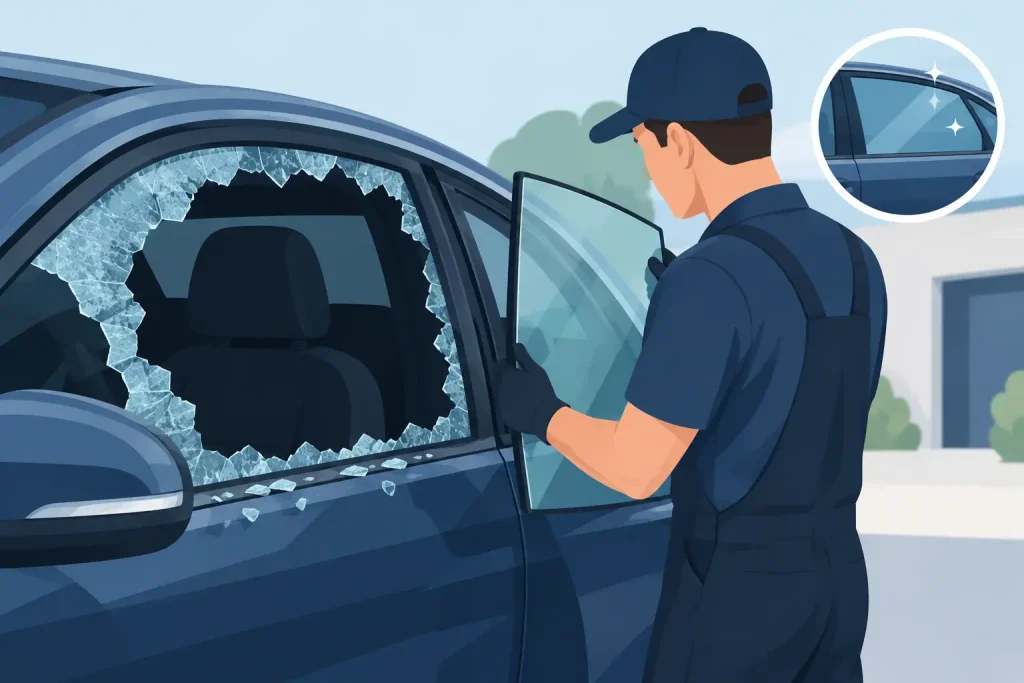
A smashed side window turns an ordinary journey into a security and safety problem. Whether the damage followed a break-in, an attempted theft, vandalism or an accident, smashed car window repair should be arranged promptly. Broken glass leaves the vehicle exposed to rain, theft and further damage, while loose fragments can injure anyone getting in or out.
The immediate priority is not making the car look tidy. It is protecting people, securing belongings and making sure the vehicle is safe to move. A specialist automotive glass service can then identify the correct glass, remove fragments properly and fit a replacement that restores weather protection and safe operation.
Smashed car window repair starts with safety
Before touching the damaged area, check that everyone is clear of loose glass. Toughened side-window glass usually breaks into many small, blunt-edged pieces, but those pieces can still cut skin and embed themselves in seats, carpets and door seals. Rear screens may also contain heating elements and, on some vehicles, aerial connections or other components that need careful handling.
If a break-in has taken place, take photographs of the damage and any visible signs of forced entry before clearing the vehicle. This can help with a police report or insurance claim. Do not disturb possible evidence unnecessarily.
There are four practical actions to take straight away:
- Move valuables, documents, keys and removable equipment out of sight or out of the vehicle completely.
- Keep children and pets away from the damaged door, rear screen or surrounding glass.
- Wear gloves if you must remove large loose pieces, and avoid brushing glass into door drains or seals.
- Cover the opening temporarily if rain is expected, but do not rely on a loose cover while driving.
A sheet of plastic secured from the inside can reduce water ingress for a short period. It is only a temporary measure. Tape can damage paintwork, flap in the wind and restrict visibility. If the opening is close to the driver, affects a door that will not shut correctly or leaves glass likely to fall into the cabin, it is usually safer not to drive until it has been assessed.
Can a smashed car window be repaired?
In most cases, a fully smashed side or rear window needs replacement rather than repair. Windscreen chip repair works because laminated windscreen glass can sometimes be stabilised with specialist resin before a crack spreads. Side windows are generally made from toughened safety glass. Once it has shattered, its strength and structure are gone.
The exception is damage that has not broken through the glass, such as a small mark on certain types of glass. Even then, a specialist should inspect it before recommending any work. A deep scratch, edge damage or a crack can weaken the panel and may worsen suddenly with vibration, temperature changes or door movement.
Replacement is not simply a matter of fitting a pane of similar-looking glass. The correct part must match the vehicle’s make, model, body style and specification. Tint, heating elements, aerials, privacy glass and acoustic properties can all vary. Choosing the wrong glass may leave functions unavailable or result in a poor fit.
Why proper fitting matters
The glass and its seals help keep water, wind noise and road dirt out of the cabin. A correctly fitted side window must also move smoothly where it is part of an electric or manual mechanism. Glass left in the bottom of a door can interfere with the regulator, scratch the new pane or cause drainage problems later.
Rear-window replacement can be more involved. Demister connections need to be handled correctly, and a damaged rear screen can leave the vehicle without a clear view behind. If the rear screen is heated, fitting must preserve that function and ensure connections are secure.
Modern vehicles may also have cameras, sensors or aerial equipment around automotive glass. Windscreen replacement commonly requires ADAS calibration where a forward-facing camera is fitted. A smashed side or rear window does not automatically mean calibration is needed, but the vehicle specification should always be checked. The right work depends on what was damaged and where the relevant systems are located.
What happens during a professional replacement?
A competent smashed car window repair service begins by confirming the vehicle details and inspecting the damaged area. This avoids ordering or fitting glass that does not match the car’s specification. The technician will also look for related damage, such as bent window channels, damaged door trims, broken locks or faults caused by attempted entry.
The remaining glass is removed from the frame, cabin and door cavity. This stage deserves care. It is easy to see large fragments on a seat, but small pieces can lodge under trims, in the door mechanism and inside rubber seals. Thorough clearing reduces the chance of rattles, scratches and cuts after the work is complete.
The replacement glass is then installed using the appropriate fitting method and checked for correct movement, sealing and alignment. On an opening window, the technician should test the switch or handle and confirm that the glass closes fully. On a rear screen, the demister and any connected features should be tested where applicable.
The job is not finished simply because there is glass in the opening. Clear visibility, a secure fit and a clean interior matter just as much. Ask what has been checked before you collect the vehicle, particularly if it has electric windows, rear heating or visible damage around the frame.
Driving and insurance after broken vehicle glass
Whether you can drive legally and safely depends on the location and extent of the damage. A missing side window may not obstruct the forward view in the same way as a broken windscreen, but it can still create a serious hazard. Rain can damage electrical controls and upholstery. Wind can carry loose glass into the cabin. The vehicle is also far less secure when parked.
A broken rear screen creates a different problem. It can severely reduce rearward visibility, expose the cabin to the weather and make the vehicle unsafe for normal use. If you cannot see clearly or secure the vehicle, arrange recovery or professional advice rather than taking risks on the road.
If you intend to claim through insurance, check your policy excess and glass-cover terms before authorising work. Some policies treat automotive glass separately from a general accident claim, while others have limits or nominated processes. Keep photographs, incident details and receipts for any temporary protection or recovery costs.
For business vehicles, downtime often costs more than the glass itself. Delivery drivers, tradespeople and fleet managers should report the damage quickly, remove tools and stock, and give the glass specialist accurate vehicle details. Early identification of the right part helps avoid unnecessary delay.
Choosing smashed car window repair you can rely on
Speed matters after a break-in, but the quickest option is not always the right one. A proper replacement should use suitable automotive glass, be fitted by people who understand vehicle glass systems, and include checks that the window or rear screen works as it should afterwards.
Be ready to provide the registration number, vehicle make and model, the location of the damaged glass and any features you know about, such as a heated rear screen or privacy tint. Photos can also help establish the scale of the damage before inspection. Euro Windscreens can assess the issue and explain whether replacement, associated repairs or further checks are needed.
Avoid trying to force a damaged electric window mechanism closed or pushing a temporary sheet into the door frame. That can trap glass, damage the regulator or create a more expensive repair. A clean, correctly fitted replacement is usually the most direct route back to a secure and usable vehicle.
Once the glass has been replaced, check the area again over the next few days. Listen for wind noise, confirm the window opens and closes normally, and test the rear demister when needed. If anything feels loose, noisy or unreliable, report it promptly. Acting early after a smashed window protects your vehicle, your belongings and your ability to get where you need to be.