
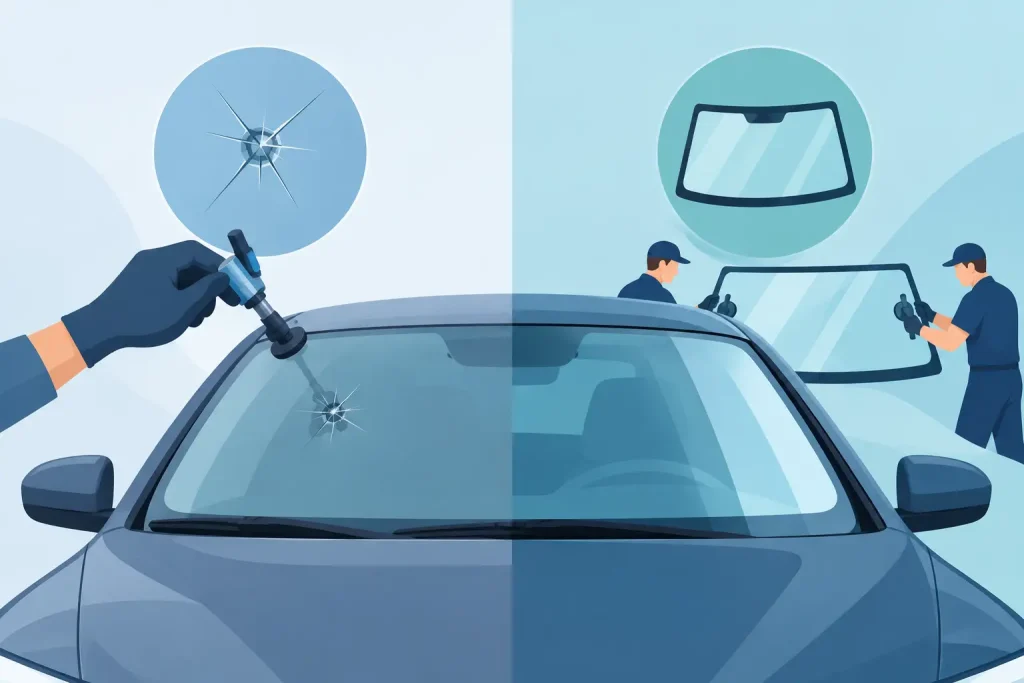
A small stone chip can look harmless at 8am and become a long crack by the evening commute. Temperature changes, potholes, door slams and normal body movement can all place extra stress on damaged glass. When weighing up windscreen repair vs replacement, the right choice depends on the damage, its position and the safety systems fitted to your vehicle – not simply how noticeable the mark looks.
A prompt assessment gives you the best chance of keeping the existing windscreen. It also helps prevent a straightforward repair becoming a larger job that takes your vehicle off the road.
Why windscreen damage needs a quick decision
Your windscreen does more than keep rain and wind out of the cabin. It contributes to the structural strength of the vehicle, supports the roof in a collision and provides a clear view of the road. On many newer vehicles, it also provides the mounting surface and viewing area for cameras and sensors used by driver-assistance systems.
A chip or crack may affect visibility, allow water into the laminated layers of the glass, or spread without warning. It can also cause an MOT issue if it is in the driver’s direct line of sight or exceeds the permitted size in the swept area.
There is no advantage in waiting to see whether damage worsens. Cover the affected area with clear tape if you can keep it dry and clean, avoid washing the vehicle or directing heat at the glass, and arrange an inspection as soon as practical.
When windscreen repair is usually possible
A professional repair works by cleaning the damaged area and injecting a specialist resin under controlled pressure. Once cured and polished, the resin restores much of the glass’s strength and makes the damage less visible. A repaired chip will not disappear completely, but it should be far less distracting than untreated damage.
Repair is often suitable for a small chip that has not spread into a crack, is away from the edge of the windscreen and is not directly in the driver’s critical viewing area. A fresh chip is generally easier to repair because it is less likely to contain dirt, moisture or debris.
The size, shape and depth matter. A compact bullseye or star break may be repairable, while a deep impact point, a long crack or several connected fractures may not be. The condition of the inner layer is equally important. If damage reaches through the laminated glass or affects the inner surface, replacement is normally the safer route.
The practical benefits of repair
If repair is safe and appropriate, it is usually the quickest and least disruptive option. It preserves the factory-fitted windscreen, avoids removing bonded glass and can often be completed in less time than a replacement. For drivers, fleet vehicles and delivery operators, that can mean less downtime.
Repair is also commonly less expensive than fitting new glass. If you are claiming through insurance, check your policy excess and whether it has a separate windscreen repair allowance. The best decision should still be based on safety and suitability rather than price alone.
When replacement is the safer option
Replacement becomes necessary when the damaged glass cannot reliably be restored. This often applies where a crack has spread, the damage sits near the windscreen edge, there are multiple impact points, or the break is large enough to compromise the driver’s view.
Damage near the edge is particularly significant because this area helps the windscreen maintain its bond and structural role. Even a small chip can be more serious there than a larger mark in the middle of the glass. Cracks can also move quickly in cold weather, after a hot demist cycle or when the vehicle travels over uneven roads.
A replacement is also likely where previous repairs have failed, water has entered the glass layers, or the windscreen has been damaged during a break-in. Side and rear windows are generally made from toughened glass rather than laminated glass. Once shattered, they require replacement rather than repair.
Visibility and MOT considerations
A windscreen should give you a clear, undistorted view of the road. UK MOT rules assess damage within the windscreen’s swept area, with tighter limits in the driver’s Zone A. As a general guide, damage over 10mm in Zone A or over 40mm elsewhere in the swept area can lead to an MOT failure.
However, MOT measurements are not a reason to delay action until a chip reaches a particular size. A smaller mark can still be distracting in bright sunlight, at night or in heavy rain. If the damage catches your eye while driving, it deserves a professional assessment.
Windscreen repair vs replacement on vehicles with ADAS
Modern windscreens often carry more technology than drivers realise. Forward-facing cameras can support features such as lane departure warnings, traffic-sign recognition, automatic emergency braking and adaptive cruise control. These systems rely on the camera being correctly positioned and calibrated.
If your vehicle needs a new windscreen, the work is not complete when the glass is fitted. The correct glass specification, approved bonding materials and appropriate ADAS recalibration may all be required. Calibration confirms that the camera or sensor is reading the road accurately from its new position.
This is not an optional extra to overlook in favour of a lower initial price. Incorrect calibration can affect the performance of safety features without creating an obvious warning straight away. A specialist should identify the systems fitted to your vehicle and explain what is needed before returning it to use.
What happens during a replacement
A proper windscreen replacement starts with checking the vehicle, identifying the correct glass and protecting the surrounding paintwork and trim. The damaged windscreen is removed carefully, and the aperture is prepared so the new glass can bond securely.
The replacement windscreen is then fitted using vehicle-appropriate adhesive. Bonding time matters. You should be told when it is safe to drive, as this can vary according to the vehicle, adhesive and conditions. If cameras or sensors are fitted, recalibration is carried out where required, followed by final checks for fit, visibility and operation.
Do not assume any replacement screen is equivalent. Glass must be compatible with your vehicle’s features, including heated elements, rain sensors, acoustic glazing, head-up display areas and camera mounts. A correctly matched screen helps restore the vehicle to its intended standard.
How to make the right call after a chip or crack
Start by considering whether the damage is getting worse or affecting your view. A chip that is small, recent and away from the edge may be a strong candidate for repair. A spreading crack, edge damage or a break in the driver’s view should be treated more urgently.
Avoid home repair kits as a substitute for an assessment when safety is in doubt. They can make a professional repair more difficult if resin is applied badly or contamination is trapped in the damaged area. They are especially unsuitable for cracks, complex breaks and vehicles with camera systems.
Take a clear photograph of the damage, noting its location, and provide your vehicle registration when booking. This helps a specialist establish the likely glass type and prepare for any sensor or calibration requirements. Euro Windscreens can assess the damage and explain whether repair is suitable or whether replacement is the safer, longer-lasting option.
Do not let a small chip set your timetable
The best outcome is often decided in the first few days after damage occurs. Keep the area clean and dry, avoid sudden temperature changes where possible, and have the glass checked before a short crack becomes a replacement job. Clear vision, secure glass and correctly working vehicle safety systems are worth acting on before the next journey.