
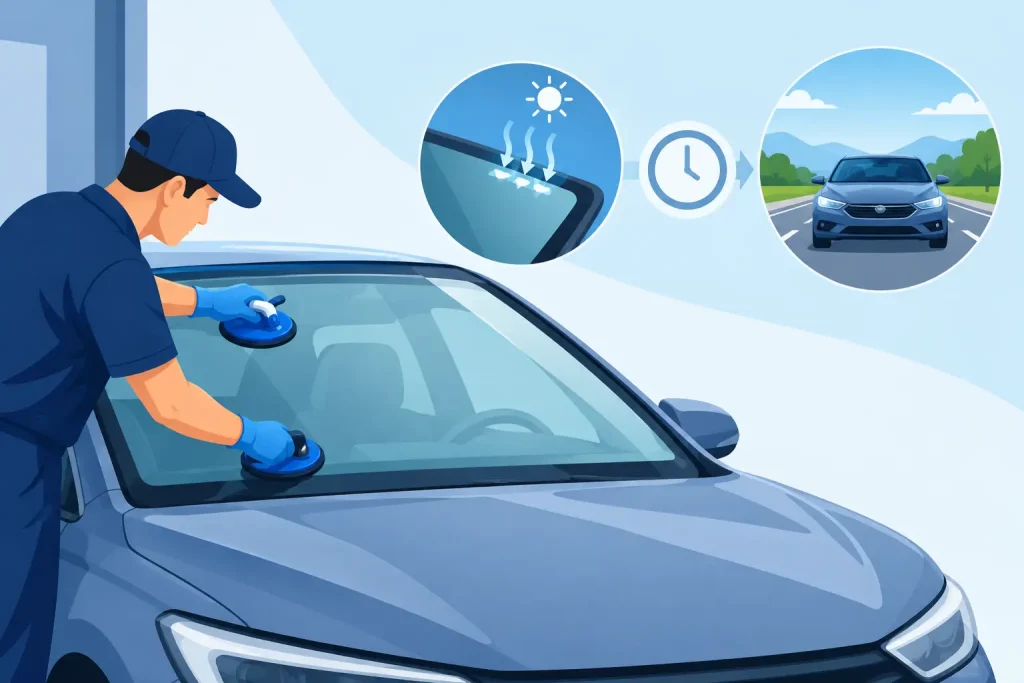
A new windscreen may look ready as soon as it has been fitted, but the adhesive holding it in place needs time to set properly. Windscreen replacement curing time determines when your vehicle can safely return to the road, particularly if the glass forms part of the vehicle’s structural safety system.
For many vehicles, the safe drive-away time can be as little as 30 to 60 minutes. That is not the same as saying the adhesive has fully cured. Full curing can take much longer, often several hours or more, depending on the materials used and the conditions on the day. Your fitter should always give you a clear, vehicle-specific time before you drive away.
Why curing time matters after a windscreen replacement
Modern windscreens do far more than keep wind, rain and road debris out of the cabin. On many cars, the windscreen supports the roof structure and helps the passenger airbag deploy in the correct direction during a collision. It must be fitted with the right glass, prepared correctly and bonded with a suitable automotive adhesive.
The adhesive is usually a high-strength polyurethane sealant. It needs sufficient time to build enough strength for normal driving and, more importantly, for the protection systems built around the windscreen. Driving too soon can put unnecessary stress on a bond that is still setting.
This is why a professional fitting process includes more than removing the broken glass and installing a replacement. The frame must be cleaned and prepared, corrosion or damage must be assessed, and the new screen must be positioned accurately before the adhesive begins to cure.
How long is windscreen replacement curing time?
There is no single curing time that applies to every vehicle. A qualified technician will use an adhesive with a stated safe drive-away time, then account for the vehicle, weather and fitting conditions. In suitable conditions, some modern products allow driving after around an hour. Other jobs may require longer.
The key instruction is the one given at the time of fitting. If you have been told not to drive for a specific period, follow that advice even if the windscreen appears secure. The sealant is not visible around most of the glass, so there is no reliable way to judge curing by looking at it.
A safe drive-away time means the adhesive has reached a level of strength considered suitable for the vehicle to be used normally. It does not mean every part of the sealant has completely hardened. Avoid treating the first journey as business as usual. Give the new installation a little care for the rest of the day.
What can make curing take longer?
Temperature is one of the biggest factors. Adhesive products cure differently in cold, damp or very dry conditions. A winter fitting in Scotland may need a different approach from work carried out in warm weather, and technicians select materials and procedures accordingly.
Humidity also affects many polyurethane adhesives. Vehicle design, the size and shape of the screen, the condition of the windscreen aperture and the exact adhesive system used can all affect the job. This is why generic advice found online should never override instructions from the person who fitted your glass.
If the replacement involves a heated windscreen, rain sensor, camera, heads-up display or other advanced equipment, there may also be checks or recalibration work to complete. That process is separate from adhesive curing, but it is just as important before relying on driver-assistance features.
What to do after your new windscreen is fitted
Once the stated safe drive-away period has passed, you can normally use the vehicle. For the first 24 hours, sensible care helps protect the new seal while it continues to cure.
Avoid slamming the doors if possible. Closing a door hard can sharply increase air pressure inside the cabin, which may place force on a fresh windscreen bond. Leave a front window slightly open when shutting a door during the first day if it is safe and practical to do so.
Do not remove any retention tape placed around the outside of the glass until your technician says it is safe. The tape is not there to hold the windscreen in permanently. It helps prevent movement and protects the edges while the adhesive settles. It can look untidy, but removing it early is not worth the risk.
Try not to use a high-pressure car wash straight away. Strong water pressure directed at the edge of the glass can interfere with a newly fitted seal. A normal journey through rain is usually not a problem once the safe drive-away time has passed, but avoid deliberately testing the seal with a pressure washer for at least the period advised by your fitter.
You should also avoid putting extra strain on the windscreen area. Do not push against the glass when getting in or out of the vehicle, attach accessories to the screen unless necessary, or use the vehicle for demanding work before the advised wait has passed. This matters particularly for vans, taxis, delivery vehicles and fleet cars that may be back on the road for long shifts soon after fitting.
Can you drive in rain after a windscreen replacement?
Yes, provided the technician has confirmed that the safe drive-away time has passed. Properly installed automotive glass is designed to provide a weatherproof seal, and normal rain should not cause a problem.
However, report any water ingress promptly. Damp carpets, drips around the windscreen pillars, misting that appears unusual or wind noise at speed can indicate that the vehicle needs to be inspected. These symptoms do not always mean the windscreen seal has failed, as blocked drainage channels and other faults can also let water into a vehicle. Either way, it is best to have the cause checked rather than ignoring it.
Is the car safe if the adhesive is still fully curing?
After the approved drive-away time, the vehicle should be safe to drive under normal conditions. The fitter will not base that decision on guesswork. They should use the adhesive manufacturer’s guidance and take account of the fitting environment.
That said, it is reasonable to be cautious. If you can postpone an unnecessary motorway trip, rough-road journey or heavy work shift until the following day, doing so gives the adhesive more time to reach its full strength. This is especially worthwhile after a large windscreen replacement or when the weather has been cold.
Do not confuse this sensible caution with a reason to delay essential travel beyond the advice you have been given. The right answer depends on the adhesive and the installation, not on a fixed rule such as waiting 24 hours in every case.
When to contact the fitter
Get in touch with the fitting company if you notice movement in the glass, a visible gap around the edge, persistent wind noise, water entering the cabin or trim that has come loose. Do not try to press the windscreen back into place or add sealant yourself. A windscreen is a safety-critical component, and a proper inspection is needed.
You should also contact the technician if warning lights appear after the work, or if parking sensors, lane-support systems, automatic braking features or a rain sensor do not behave as expected. Vehicles with cameras behind the windscreen may need precise recalibration following replacement. The glass can be correctly bonded while a camera still requires adjustment.
For fleet managers and working drivers, keep the fitting paperwork with the vehicle records. It should confirm the work carried out and any aftercare instructions. Clear records help when several drivers use the same vehicle and reduce the chance of someone removing tape or taking the vehicle out too early.
A replacement windscreen should restore clear vision, weather protection and confidence in the vehicle’s safety systems. Before setting off, take the stated curing period seriously, follow the aftercare advice and ask the fitter if anything about the installation or your journey plans is unclear.