
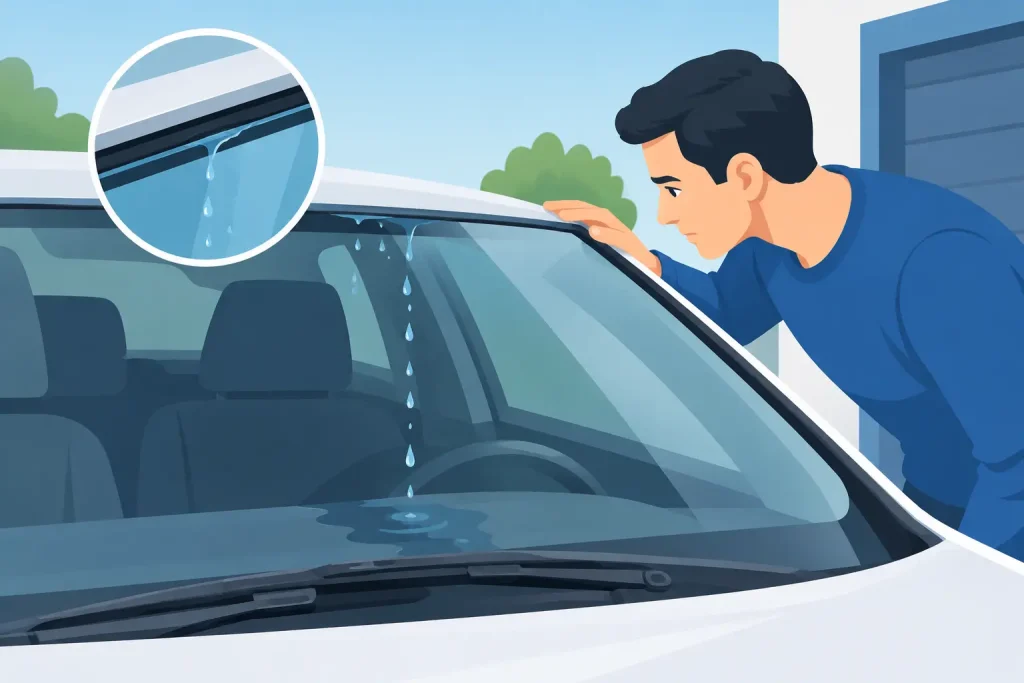
A wet carpet, misted-up windows or water running down the inside of the glass can be worrying after a new windscreen has been fitted. A windscreen water leak after replacement should not be ignored, particularly in Scotland’s wet weather. It can affect visibility, damage electrical components and leave you unsure whether your vehicle is safe to use.
The good news is that a leak does not always mean the replacement glass itself is faulty. Water can enter around the windscreen, through trim or drainage areas nearby, or from another part of the vehicle that only becomes obvious after heavy rain. The right approach is to identify the source properly, then arrange a suitable repair rather than trying to seal over the problem at home.
What to do when water appears after replacement
First, take note of where the water is showing inside the vehicle. Water at the top edge of the windscreen, around the A-pillars, in the footwells or behind the dashboard can point to different causes. If possible, take clear photographs before drying the area. This gives the fitter useful information and can make the inspection quicker.
Avoid using a pressure washer to test the windscreen or applying bathroom sealant, silicone or tape around the outer edge of the glass. These products can trap moisture, interfere with proper bonding and make a professional repair more difficult. A windscreen is bonded with specialist automotive adhesive, not sealed in place with a visible bead of household sealant.
If water is reaching the dashboard, fuse box, interior lights, sensors or other electrical equipment, keep use of the vehicle to a minimum until it has been checked. Water and vehicle electrics are a poor combination. If the windscreen is leaking badly enough to affect your view, or the interior is soaking wet, arrange an inspection promptly.
Is the new windscreen the cause?
It is reasonable to contact the fitting company if the leak started shortly after the replacement. A correctly installed windscreen should provide a weather-tight seal. The fitter can inspect the glass, bonding line, clips, trims and surrounding bodywork, then determine whether the issue is linked to the installation.
However, timing alone does not prove the windscreen is the source. Modern vehicles have drainage channels, scuttle panels, pollen-filter housings, roof rails, sunroofs and door membranes that can all allow water into the cabin. Leaves and road debris can block drain holes, while a displaced trim panel can direct water somewhere it should not go.
A professional inspection matters because water does not always travel in a straight line. It may enter at the base of the windscreen but appear in a front footwell. Equally, a leak from a blocked scuttle drain may run behind the dashboard and look like a windscreen seal problem.
Common causes of a windscreen water leak after replacement
Incomplete or disturbed bonding
The windscreen is fixed to the vehicle aperture with high-strength urethane adhesive. If the bonding surface was contaminated, damaged, uneven or not prepared correctly, there may be a small gap in the seal. This can allow water to pass through during rain or when driving at speed.
A leak can also occur if the adhesive bead has not made full contact around the aperture. This is not something that can be assessed reliably from the outside. The fitter may need to remove trims and carry out a controlled water test to locate the exact entry point.
Damaged or incorrectly fitted trim
External mouldings and trims do not usually create the primary waterproof seal, but they help manage water and protect the windscreen edge. If a clip is broken, a moulding has lifted or a scuttle panel has not been refitted correctly, water may be channelled towards an area where it should drain away.
This is one reason why it is worth returning to a windscreen specialist rather than relying on a quick visual check. A missing clip can appear minor but still cause rattles, wind noise or water ingress.
Corrosion around the windscreen aperture
Rust beneath the old windscreen can compromise the surface where the new glass is bonded. Minor corrosion may not be visible until the original windscreen is removed. If it has affected the aperture, it may need treatment before the replacement can achieve a reliable seal.
This is more likely on older vehicles, but it can happen on any car where paint has been damaged around the windscreen edge. The correct repair depends on the extent of the corrosion. Light surface rust may be treatable, while more serious corrosion can require bodywork repair before the glass is refitted.
A separate water ingress issue
Blocked scuttle drains are a common cause of damp front carpets and can be mistaken for a leaking windscreen. The scuttle is the panel area at the base of the windscreen, below the wipers. It is designed to collect rainwater and direct it away through drains. When those drains block with leaves or dirt, water can overflow into the ventilation system or cabin.
Other possible sources include a leaking sunroof drain, damaged door seal, failed door membrane, roof aerial seal or a worn bonnet cable grommet. The repair should follow the evidence, not assumptions.
How a specialist should check the leak
A proper inspection starts with the condition of the glass and its surrounding trims. The technician will look for lifted mouldings, gaps, loose clips, signs of adhesive failure and evidence of water tracks. They may also inspect inside the vehicle around the headlining, A-pillars, dashboard and carpets.
The next step is often a controlled water test. Water is applied gradually to specific areas while another person checks inside the vehicle. This is more accurate than soaking the whole car at once because it narrows down where the water starts to enter.
If the windscreen bond is at fault, the best repair may involve removing and refitting the windscreen with the correct materials. Simply adding sealant around the edge may hide the leak for a while, but it does not confirm that the structural bond is sound. The windscreen contributes to the strength of the vehicle body and supports correct airbag performance in many vehicles, so the installation must be treated as safety-critical work.
For vehicles with cameras or sensors mounted behind the glass, the process may also involve ADAS checks or recalibration after refitting. Features such as lane support, emergency braking assistance and traffic-sign recognition rely on the camera being correctly positioned and calibrated. The need for recalibration depends on the vehicle and the work carried out.
Can you drive with a leaking windscreen?
It depends on the severity and where the water is reaching. A small drip that has been identified and is being booked in for repair may not stop a short, necessary journey. Even then, monitor the windscreen for misting and keep absorbent towels away from pedals and electrical areas.
Do not treat a serious leak as a cosmetic issue. Avoid driving if water is affecting your vision, pooling near electrical components, dripping through interior lights or causing warning messages. Damp carpets can also create mould, unpleasant odours and corrosion over time, particularly if the vehicle is used daily for work or family travel.
For delivery drivers, fleet vehicles and anyone who depends on their car or van, reporting the issue early is usually the quickest route to keeping downtime under control. Waiting for a small leak to become an electrical fault is rarely the cheaper option.
What to ask the fitter
When you contact the fitting company, explain when the water first appeared, whether it happens only in heavy rain and exactly where you have seen dampness. Mention any work carried out around the vehicle, such as roof-rack fitting, body repairs or blocked drains being cleared.
Ask for the leak to be inspected rather than requesting a sealant application alone. A reputable specialist should explain whether the source is the windscreen installation, trim, corrosion or another drainage issue, and set out the repair needed in clear terms. Euro Windscreens can assess replacement-related concerns and advise on the safest next step for your vehicle.
Dry the interior as soon as you can, keep a record of when the leak occurs and arrange a professional check before repeated rain turns a small problem into a larger repair.